No Compromise on Iran: Confronting Power Vacuums, Separatist Traps, and MEK Ambitions in the Revolution
Introduction
The current revolution in Iran is a pivotal moment for the Iranian people, who overwhelmingly seek a complete overthrow of the Islamic Republic. We are now nearly a month into the US and Israel’s operation against the Islamic Republic; Khamenei is dead, IRGC assets and infrastructure are being systematically dismantled, and drone strikes are eliminating regime personnel. For Iranians and those of us in the West working towards regime change, it’s an exciting and surreal moment in history.
Although exact numbers are difficult to confirm amid the internet blackout and the regime’s tight restrictions on any outside polling, many estimates indicate that exiled Crown Prince Reza Pahlavi has roughly 80% support among Iranians as the transitional leader. Pahlavi has a unique combination of nostalgia, name recognition, backing from global leaders, and support from his people, and is effectively the only unifying figure who can guide the nation toward a secular, democratic future. His charter, the Iran Prosperity Project,aligns with preserving Iran's territorial integrity and encourages alliances with the United States and Israel, which will promote regional stability.
Amid the surge of successful U.S.-Israeli military actions and internal uprisings, serious risks could potentially threaten to undermine hard-won momentum toward full regime change. These dangers are real and pressing, and it’s important to stay vigilant to protect the revolution’s integrity and secure a united, free future for Iran.
Risk 1: Dangers Associated with the U.S. Arming the Kurds
U.S. support for Kurdish groups, including possibly providing arms, could accelerate the Islamic Republic’s overthrow by fortifying opposition forces in Iran's western regions. Reports from early 2026 suggest the CIA had discussions with Iranian Kurdish leaders in Iraq about military aid to help spark uprisings, which could weaken the regime’s control in more ethnically diverse areas. But this approach increases threats to Iran's territorial integrity by encouraging separatist movements and fracturing the opposition.
Potential for Territorial Fragmentation
Arming Kurds risks empowering militant groups like PJAKto seize border territories, exacerbating ethnic tensions and inviting external interference from neighbors like Turkey or Iraq. This could lead to internal conflict, taking focus from unified regime change and risking a “balkanized” Iran, contrary to the revolution's commitment to national cohesion.
Opposition Splits
Selective arming could alienate non-Kurdish opposition elements, including Persians, Azerbaijanis, and Balochis, creating distrust among these groups and again weakening the broad coalition Iranians need to succeed. Recent X discussions highlight fears that such divisions could create a "rally-around-the-flag" effect, inadvertently bolstering regime remnants.
Regime Misinformation
Initial reports of U.S. arming may stem from regime propaganda aimed at sowing division. Iranian state media has spread claims of foreign-backed separatism to portray the revolution as a threat to sovereignty to deter public participation. U.S. officials have denied centering objectives on arming specific forces, emphasizing that these narratives are regime-fueled disinformation tactics.
To counter the Islamic Republic’s misinformation, U.S. and Israeli aid should prioritize broad opposition support under Pahlavi's leadership and reaffirm commitment to Iran's unity rather than ethnic silos.
Risk 2: The Risk of a Power Vacuum
“Anti-war” voices in the West often cite Iraq, Afghanistan, and Arab Spring countries as case studies against intervention in the Middle East. The reasons regime change failed in these countries are varied, but in most cases, a combination of sectarian violence, Islamic extremism, lack of a centralized leader, and arbitrary borders drawn around clashing nationalities doomed them.
Iranians have 3000 years of shared history and culture binding them to the land and to each other, and despite the regime’s best efforts, have held onto their culture and resisted Islamification surprisingly well for a population under an Islamic theocracy. Reza Pahlavi as a secular, unifying leader reduces the likelihood of a power vacuum, but external interference by regime loyalists (Turkey, for example) and internal fragmentation could still undermine the first few weeks post-regime. The opposition under Pahlavi must work closely with US and Israeli leadership, and surround themselves with skilled strategists to make the transition quick, precise, and tightly communicated until the country can hold free elections.
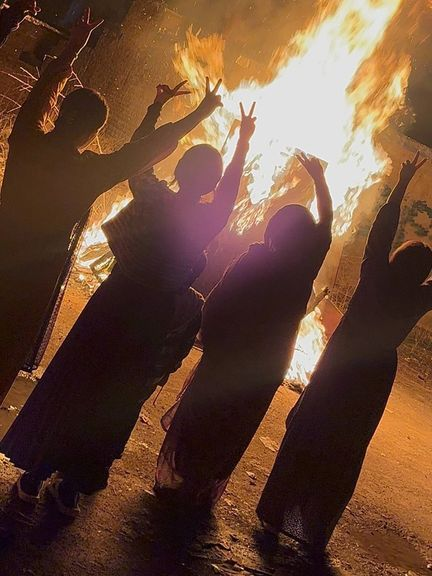
Image: Iranians defy crackdowns to celebrate Chaharshanbe Soori, March 2026
Challenges to Pahlavi's Timely Return
Safety concerns like ongoing regime loyalist threats (both inside and outside Iran), or the danger of going into an open war zone too soon, could delay Pahlavi's return from exile. A reasonable timeframe to minimize vacuum risks is 1-3 months post-regime collapse; within this period, we would want to see an army and IRGC surrender, international recognition of the transitional government under Pahlavi, and a stabilized military environment. During the period before Pahlavi returns, there would need to be approved interim councils of opposition leaders inside the country to maintain order while he assumes transitional leadership. A delay beyond this timeline could give any remaining IRGC factions time to either seize control of certain cities or attack citizens in desperation.
U.S. Influence and Alternative Leaders
Anti-Pahlavi organizations have been heavily lobbying US policymakers for years. Unsurprisingly, some of these have grown more intense and persistent since January as they worry about their future in a Pahlavi-led Iran friendly to the United States. In the event of the US government backing an alternative to Pahlavi, it could fragment the opposition and prolong post-regime instability. Potential contenders include:
Maryam Rajavi of the MEK. The Marxist Mujahedeen-e-Khalq, who we’ll discuss in more detail later, is widely rejected by Iranians but is trying to rebrand and, amusingly, announce itself as a transitional leader. To gauge sentiment, Iran watchers in the west would be wise to listen to Iranians inside the country rather than the paid MEK lobbyists.
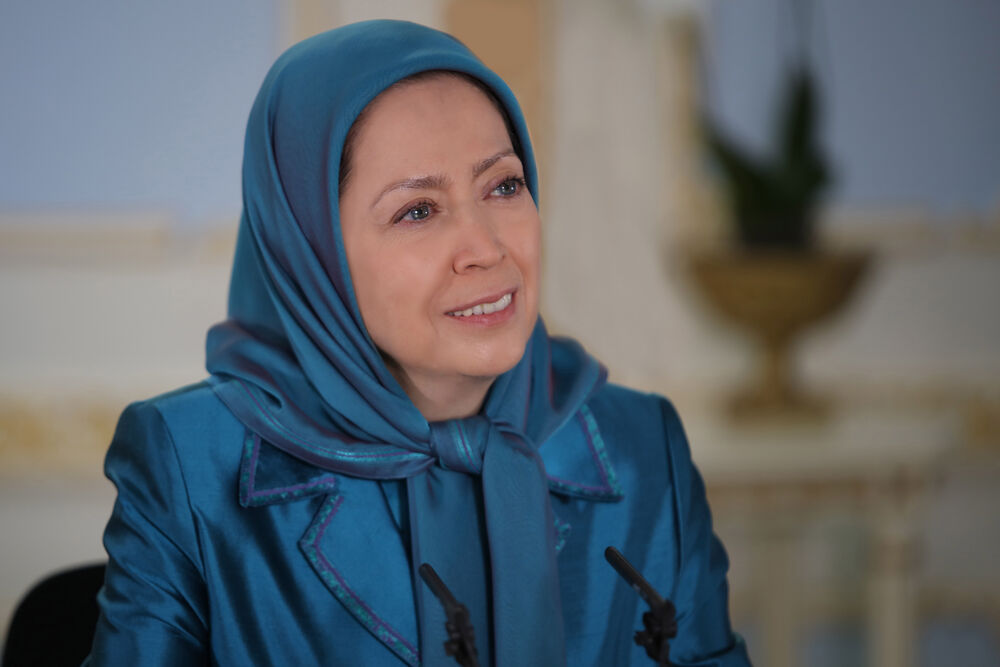
Image: Maryam Rajavi
Hamed Esmaeilion, a Canadian-Iranian diaspora activist with limited internal reach. Esmaeilion only became a known opposition figure in 2020 after his family was killed on Ukrainian flight PS752, shot down by the IRGC. In 2023, Esmaeilion served on the Alliance for Freedom and Democracy in Iran, a short-lived coalition of various opposition figures. The group included Reza Pahlavi, Masih Alinejad, Nazanin Boniadi, Abdullah Mohtadi, and Shirin Ebadi, and it was framed as a way to decentralize transitional power from one person and appeal to the anti-monarchists. However, critics pointed out the questionable records of some members in the context of regime change. Ebadi supported the 1979 coup, Mohtadi is a former Marxist-turned-social democrat, and rumors abound that Alinejad and Boniadi are reformist at best, and regime-connected at worst.
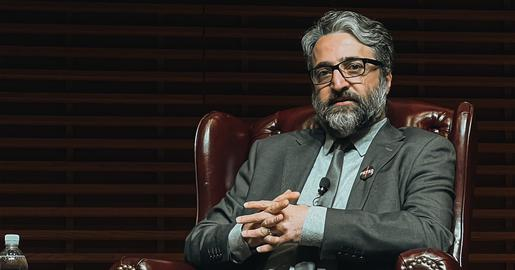
Image: Hamed Esmaeilion
Shirin Ebadi, a human rights lawyer, was historically anti-monarchist and initially supported the 1979 revolution, later working as a reformist within the Islamic Republic. While her advocacy for women’s and children’s rights earned her international recognition and a Nobel Peace Prize, her past positions and lack of a broad coalition made her a less likely candidate for a leading transitional role. Her reformist background also contrasts with the current opposition’s emphasis on full regime change rather than gradual reform.
On March 16, however, Reza Pahlavi announced the formation of the Committee for Drafting Transitional Justice Regulations and appointed Shirin Ebadi to lead it. This step suggests two developments: Ebadi may have adjusted her views to align more closely with the goal of complete regime change, and Pahlavi is working to include a wider range of voices in shaping the transition.
This reflects Pahlavi’s goal of building an inclusive process for accountability and justice in the post-regime period.
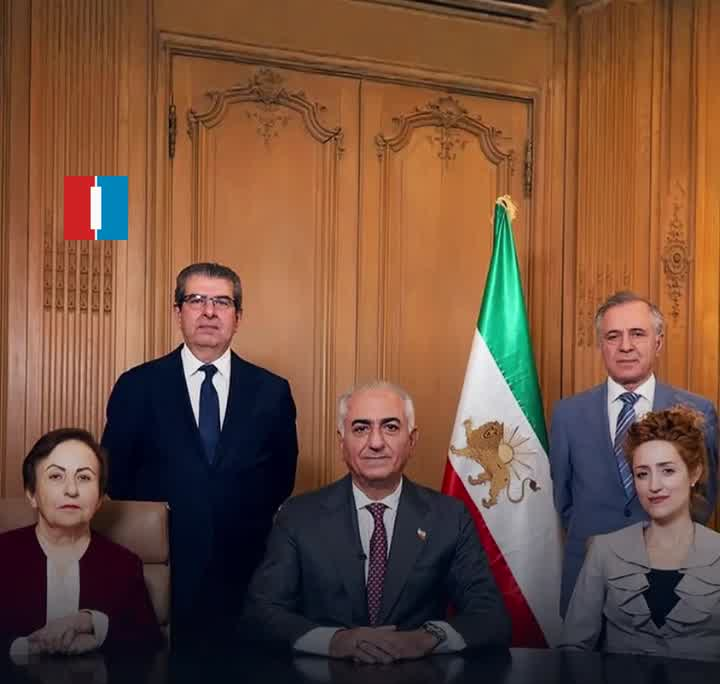
Image: Shirin Ebadi, left, in Reza Pahlavi’s Committee for Drafting Transitional Justice Regulations
A figure within the Islamic Republic. This is the most unlikely, but would also be the most catastrophic. Should the US administration decide the path of least resistance is to install a regime insider, perhaps reform-minded, it would be a breathtaking betrayal of the Iranian people. A couple contenders for this option:
Hassan Rouhani - Sharia lawyer, president of Iran from 2013 to 2021, and a member of Iran’s Assembly of Experts since 1999. Rouhani is described as a “moderate conservative” who ran with reformist support, though Iran watchers will know the difference between a true conservative and a moderate conservative within the Islamic Republic is arbitrary.
Masoud Pezeshkian - Iran’s current president since July 2024, and member of the reformist faction. Pezeshkian is considered by many to be a weak president, facing pressure from hardliners, and governing one of the worst economic crises in the country. His term also began with Israel’s assassinationof Ismail Haniyeh, a key Islamic Republic ally, in Tehran, an embarrassment for any sitting leader.
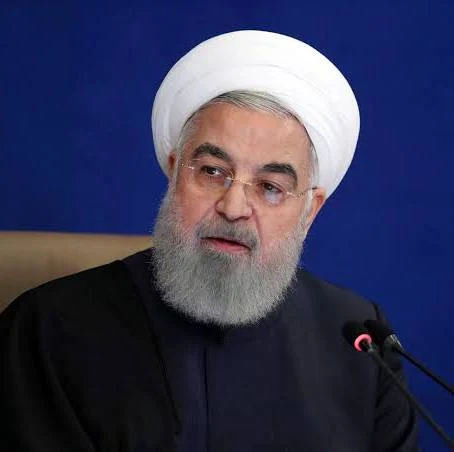
Image: Hassan Rouhani
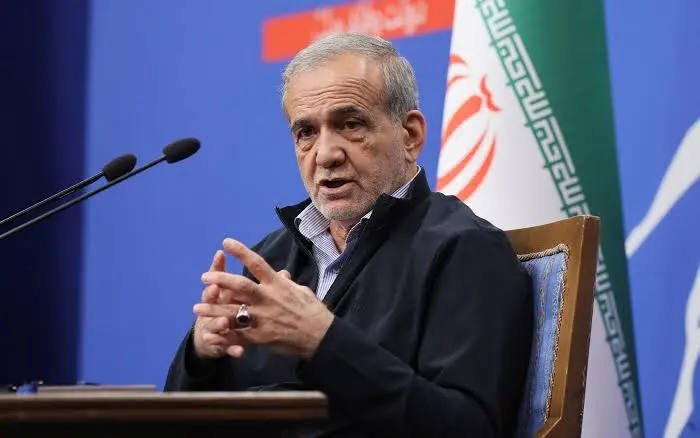
Image: Masoud Pezeshkian
Such choices would undermine the pro-regime change opposition, as they lack Pahlavi's widespread appeal, name recognition, and galvanizing power, and could easily invite accusations of foreign imposition, eroding legitimacy and risking a "garrison state" under hardliners.
Amplifying Pahlavi's mandate and allied coordination with the U.S. and Israel can help avoid these pitfalls to support a structured transition.
Risk 3: The MEK
Established in 1965 as a student group opposing Shah Mohammad Reza Pahlavi, the Mojahedin-e Khalq’s (MEK) core founding ideology blended revolutionary Marxism with a progressive interpretation of Islamist Shiism. They emphasized armed resistance against their view of tyranny and western influence, expressed in the 1970s through violent tactics including guerilla attacks on US personnel in Iran and targets associated with the Shah. Its violent, extremist history later landed the MEK a foreign terror organization (FTO) designation from the US State Department in 1997.
The MEK initially supported the 1979 Islamic Revolution and Ayatollah Khomeini and had a hand in the 1979 US embassy takeover. However, dissatisfied with resistance suppression and power struggles, the group under Masoud Rajavi broke with Khomeini in the early 1980s and shifted to armed opposition to the Islamic Republic. Critics point out that while the MEK underwent a self-described “ideological revolution,” the result of this political overhaul was simply rebranded extremism, mixed with cult-like structures (allegiance to Rajavi family, mandatory celibacy, etc.).
Despite their official opposition to the ayatollah, it can be argued that there is no large gulf between the MEK’s ideology and that of the regime. Iranians consider them nearly as extreme as the current government, and remembering that they took part in the 1979 revolution, reject the idea of being ruled by the MEK in any capacity. In 2022, Yasmin Pahlavi popularized the slogan “Death to the three corrupt entities - the mullah, the leftist, and the mujahid,” the mujahid in this instance being the MEK.
In an effort to remove the negative association with their name, the group is now mostly operating under the National Council of Resistance of Iran (NCRI) umbrella, which is the political counterpart to the militant MEK.
The MEK/NCRI's aggressive lobbying in Washington - including payments to Rudy Giuliani, Mike Pompeo, John Bolton, Cory Booker,and others - falsely positions it as an alternative to Pahlavi. When these efforts fail, which they are as we can see from the rebrand attempt and continued unpopularity, the MEK’s history of extremism raises security concerns.
Lobbying and Bribery in Washington
The MEK has spent millions on paid speeches and advocacy, winning a delisting from UK and EU terror lists in 2008 and 2009, followed by the U.S. in 2012. Influential backers like Giuliani have attacked Pahlavi, promoting the MEK as a "government-in-exile," which distracts from genuine opposition.
Risk of Extremism and Violence in the U.S.
Frustrated by unfulfilled promises, the MEK could resort to radical actions, leveraging its cult structure and past terrorism (e.g., attacks on Iranian scientists and alignments with Saddam Hussein). Analysts warn of potential violence if delisted status enables operations, posing security risks to U.S. soil and undermining alliances. The group's lack of domestic support makes it a destabilizing force, not a viable option.
U.S. policymakers must reject MEK overtures to safeguard the revolution and allied ties.
Risk 4: General Concerns About Iran's Territorial Integrity
Preserving Iran's territorial integrity is paramount, as ethnic diversity (including Kurds, Azerbaijanis, Balochis, Arabs, and Turkmen) could fuel fragmentation in a power vacuum. Pahlavi has stated consistentlythat Iran’s territorial integrity is critical during and after the transition from the Islamic Republic, and that “Balkanizing” Iran is not an option.
Ethnic Mobilization and Separatism
Regime collapse might embolden some groups to seek autonomy, with Kurds mobilizing via PJAKand others vying for influence in resource-rich areas. This risks civil war, external meddling (from ethnically-similar countries like Azerbaijan or Turkey, for example), and refugee crises.
Impact on the Revolution
Though unlikely, given the massive momentum we see in the regime change movement, division could threaten unity as fears of balkanization might discourage broad participation. Reza Pahlavi counters this risk by consistently calling for a united and democratic Iran, where all citizens in all ethnicities are treated as equals. By rallying people around the Lion and Sun flag as a symbol of pre-1979 patriotism, he promotes equality and reinforces Iran’s territorial integrity as inviolable. This messaging helps sustain widespread support and prevents the fractures that could derail the movement.
Allied support from the U.S. and Israel should focus on inclusive strategies to maintain unity.
Conclusion
The regime change revolution in Iran holds immense promise under Reza Pahlavi’s leadership, backed by roughly 80% support among Iranians and committed to full overthrow, free elections, territorial integrity, and strong alliances with the U.S. and Israel.
Yet dangers like Kurdish fragmentation, misplaced support for alternative figures, MEK extremism and lobbying, and broader threats to national cohesion could still derail progress if left unchecked.
US and Israeli leadership, Iranians in Iran and the diaspora, and Iran analysts should prioritize unity under Pahlavi’s mandate, reject divisive influences, and coordinate closely with allies to navigate these risks and secure a free and democratic future. The regime is collapsing, and now is the time to protect the revolution.
==========
Natalia Butler (nom de guerre) works in marketing, but her vocation is Iran. Passionate about the loving, deeply-alive nature of Iranians even in the face of decades of oppression. She has dedicated much of her time to studying Iran and has worked with opposition groups to help write legislation proposals, lobby for sanctions against the regime, etc. Natalia looks forward to writing articles from a cafe in Tehran very, very soon.