No Compromise on Iran: Confronting Power Vacuums, Separatist Traps, and MEK Ambitions in the Revolution
The current revolution in Iran is a pivotal moment for the Iranian people, who overwhelmingly seek a complete overthrow of the Islamic Republic.
Introduction
The current revolution in Iran is a pivotal moment for the Iranian people, who overwhelmingly seek a complete overthrow of the Islamic Republic. We are now nearly a month into the US and Israel’s operation against the Islamic Republic; Khamenei is dead, IRGC assets and infrastructure are being systematically dismantled, and drone strikes are eliminating regime personnel. For Iranians and those of us in the West working towards regime change, it’s an exciting and surreal moment in history.
Although exact numbers are difficult to confirm amid the internet blackout and the regime’s tight restrictions on any outside polling, many estimates indicate that exiled Crown Prince Reza Pahlavi has roughly 80% support among Iranians as the transitional leader. Pahlavi has a unique combination of nostalgia, name recognition, backing from global leaders, and support from his people, and is effectively the only unifying figure who can guide the nation toward a secular, democratic future. His charter, the Iran Prosperity Project,aligns with preserving Iran's territorial integrity and encourages alliances with the United States and Israel, which will promote regional stability.
Amid the surge of successful U.S.-Israeli military actions and internal uprisings, serious risks could potentially threaten to undermine hard-won momentum toward full regime change. These dangers are real and pressing, and it’s important to stay vigilant to protect the revolution’s integrity and secure a united, free future for Iran.
Risk 1: Dangers Associated with the U.S. Arming the Kurds
U.S. support for Kurdish groups, including possibly providing arms, could accelerate the Islamic Republic’s overthrow by fortifying opposition forces in Iran's western regions. Reports from early 2026 suggest the CIA had discussions with Iranian Kurdish leaders in Iraq about military aid to help spark uprisings, which could weaken the regime’s control in more ethnically diverse areas. But this approach increases threats to Iran's territorial integrity by encouraging separatist movements and fracturing the opposition.
Potential for Territorial Fragmentation
Arming Kurds risks empowering militant groups like PJAKto seize border territories, exacerbating ethnic tensions and inviting external interference from neighbors like Turkey or Iraq. This could lead to internal conflict, taking focus from unified regime change and risking a “balkanized” Iran, contrary to the revolution's commitment to national cohesion.
Opposition Splits
Selective arming could alienate non-Kurdish opposition elements, including Persians, Azerbaijanis, and Balochis, creating distrust among these groups and again weakening the broad coalition Iranians need to succeed. Recent X discussions highlight fears that such divisions could create a "rally-around-the-flag" effect, inadvertently bolstering regime remnants.
Regime Misinformation
Initial reports of U.S. arming may stem from regime propaganda aimed at sowing division. Iranian state media has spread claims of foreign-backed separatism to portray the revolution as a threat to sovereignty to deter public participation. U.S. officials have denied centering objectives on arming specific forces, emphasizing that these narratives are regime-fueled disinformation tactics.
To counter the Islamic Republic’s misinformation, U.S. and Israeli aid should prioritize broad opposition support under Pahlavi's leadership and reaffirm commitment to Iran's unity rather than ethnic silos.
Risk 2: The Risk of a Power Vacuum
“Anti-war” voices in the West often cite Iraq, Afghanistan, and Arab Spring countries as case studies against intervention in the Middle East. The reasons regime change failed in these countries are varied, but in most cases, a combination of sectarian violence, Islamic extremism, lack of a centralized leader, and arbitrary borders drawn around clashing nationalities doomed them.
Iranians have 3000 years of shared history and culture binding them to the land and to each other, and despite the regime’s best efforts, have held onto their culture and resisted Islamification surprisingly well for a population under an Islamic theocracy. Reza Pahlavi as a secular, unifying leader reduces the likelihood of a power vacuum, but external interference by regime loyalists (Turkey, for example) and internal fragmentation could still undermine the first few weeks post-regime. The opposition under Pahlavi must work closely with US and Israeli leadership, and surround themselves with skilled strategists to make the transition quick, precise, and tightly communicated until the country can hold free elections.
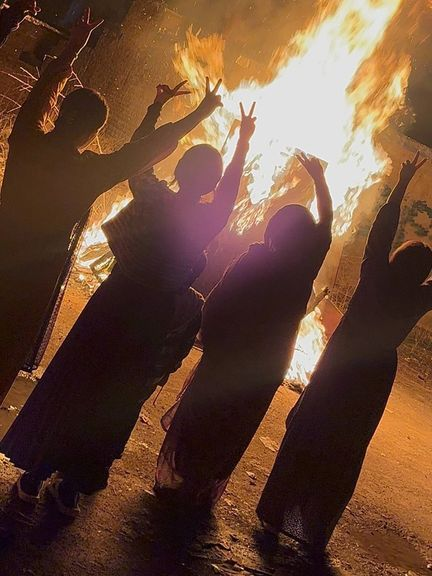
Image: Iranians defy crackdowns to celebrate Chaharshanbe Soori, March 2026
Challenges to Pahlavi's Timely Return
Safety concerns like ongoing regime loyalist threats (both inside and outside Iran), or the danger of going into an open war zone too soon, could delay Pahlavi's return from exile. A reasonable timeframe to minimize vacuum risks is 1-3 months post-regime collapse; within this period, we would want to see an army and IRGC surrender, international recognition of the transitional government under Pahlavi, and a stabilized military environment. During the period before Pahlavi returns, there would need to be approved interim councils of opposition leaders inside the country to maintain order while he assumes transitional leadership. A delay beyond this timeline could give any remaining IRGC factions time to either seize control of certain cities or attack citizens in desperation.
U.S. Influence and Alternative Leaders
Anti-Pahlavi organizations have been heavily lobbying US policymakers for years. Unsurprisingly, some of these have grown more intense and persistent since January as they worry about their future in a Pahlavi-led Iran friendly to the United States. In the event of the US government backing an alternative to Pahlavi, it could fragment the opposition and prolong post-regime instability. Potential contenders include:
Maryam Rajavi of the MEK. The Marxist Mujahedeen-e-Khalq, who we’ll discuss in more detail later, is widely rejected by Iranians but is trying to rebrand and, amusingly, announce itself as a transitional leader. To gauge sentiment, Iran watchers in the west would be wise to listen to Iranians inside the country rather than the paid MEK lobbyists.
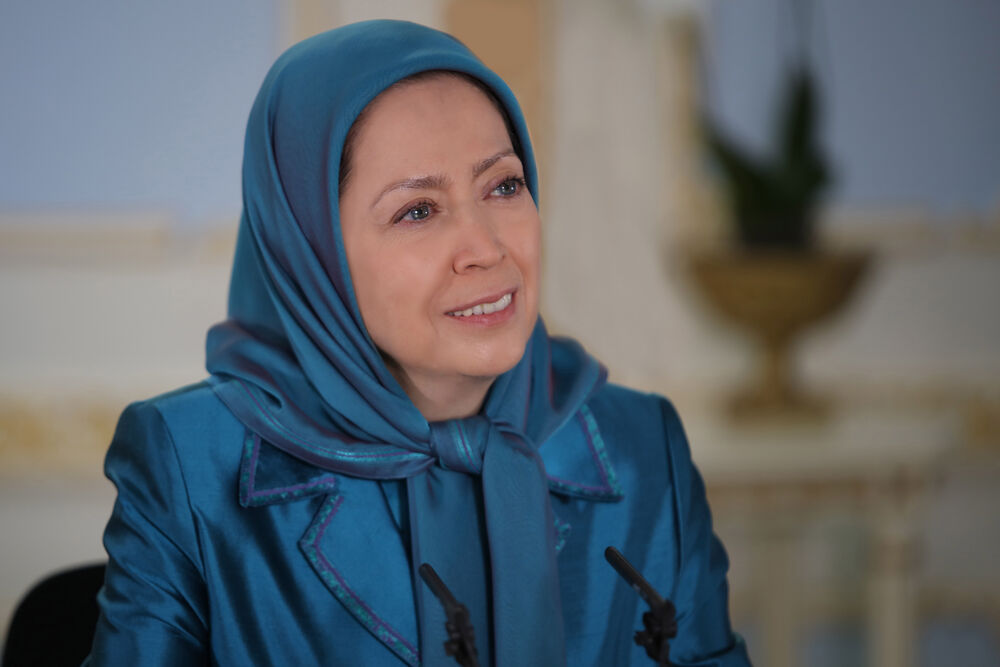
Image: Maryam Rajavi
Hamed Esmaeilion, a Canadian-Iranian diaspora activist with limited internal reach. Esmaeilion only became a known opposition figure in 2020 after his family was killed on Ukrainian flight PS752, shot down by the IRGC. In 2023, Esmaeilion served on the Alliance for Freedom and Democracy in Iran, a short-lived coalition of various opposition figures. The group included Reza Pahlavi, Masih Alinejad, Nazanin Boniadi, Abdullah Mohtadi, and Shirin Ebadi, and it was framed as a way to decentralize transitional power from one person and appeal to the anti-monarchists. However, critics pointed out the questionable records of some members in the context of regime change. Ebadi supported the 1979 coup, Mohtadi is a former Marxist-turned-social democrat, and rumors abound that Alinejad and Boniadi are reformist at best, and regime-connected at worst.
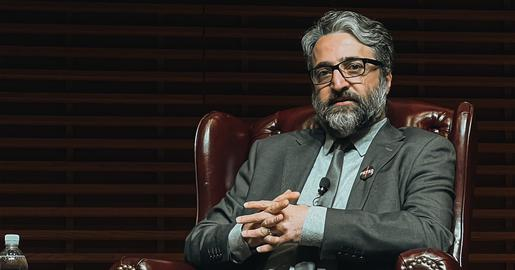
Image: Hamed Esmaeilion
Shirin Ebadi, a human rights lawyer, was historically anti-monarchist and initially supported the 1979 revolution, later working as a reformist within the Islamic Republic. While her advocacy for women’s and children’s rights earned her international recognition and a Nobel Peace Prize, her past positions and lack of a broad coalition made her a less likely candidate for a leading transitional role. Her reformist background also contrasts with the current opposition’s emphasis on full regime change rather than gradual reform.
On March 16, however, Reza Pahlavi announced the formation of the Committee for Drafting Transitional Justice Regulations and appointed Shirin Ebadi to lead it. This step suggests two developments: Ebadi may have adjusted her views to align more closely with the goal of complete regime change, and Pahlavi is working to include a wider range of voices in shaping the transition.
This reflects Pahlavi’s goal of building an inclusive process for accountability and justice in the post-regime period.
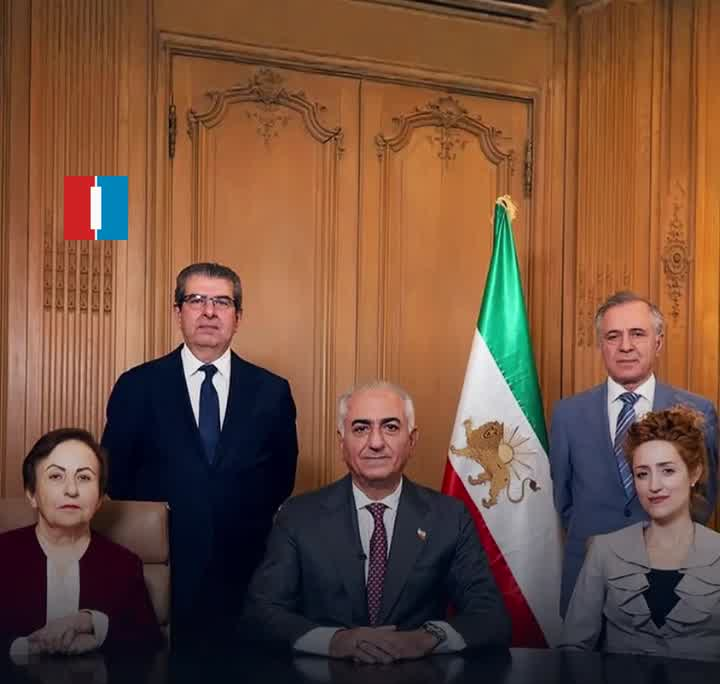
Image: Shirin Ebadi, left, in Reza Pahlavi’s Committee for Drafting Transitional Justice Regulations
A figure within the Islamic Republic. This is the most unlikely, but would also be the most catastrophic. Should the US administration decide the path of least resistance is to install a regime insider, perhaps reform-minded, it would be a breathtaking betrayal of the Iranian people. A couple contenders for this option:
Hassan Rouhani - Sharia lawyer, president of Iran from 2013 to 2021, and a member of Iran’s Assembly of Experts since 1999. Rouhani is described as a “moderate conservative” who ran with reformist support, though Iran watchers will know the difference between a true conservative and a moderate conservative within the Islamic Republic is arbitrary.
Masoud Pezeshkian - Iran’s current president since July 2024, and member of the reformist faction. Pezeshkian is considered by many to be a weak president, facing pressure from hardliners, and governing one of the worst economic crises in the country. His term also began with Israel’s assassinationof Ismail Haniyeh, a key Islamic Republic ally, in Tehran, an embarrassment for any sitting leader.
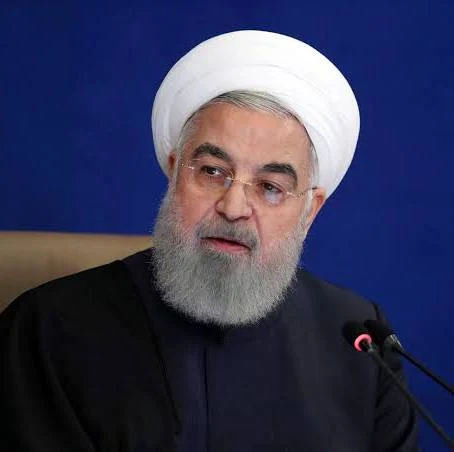
Image: Hassan Rouhani
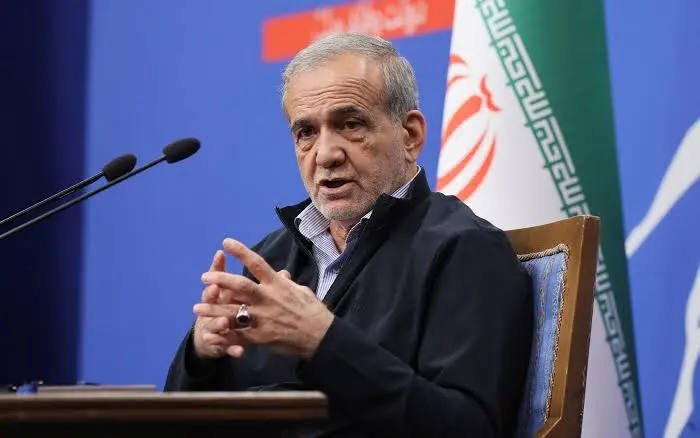
Image: Masoud Pezeshkian
Such choices would undermine the pro-regime change opposition, as they lack Pahlavi's widespread appeal, name recognition, and galvanizing power, and could easily invite accusations of foreign imposition, eroding legitimacy and risking a "garrison state" under hardliners.
Amplifying Pahlavi's mandate and allied coordination with the U.S. and Israel can help avoid these pitfalls to support a structured transition.
Risk 3: The MEK
Established in 1965 as a student group opposing Shah Mohammad Reza Pahlavi, the Mojahedin-e Khalq’s (MEK) core founding ideology blended revolutionary Marxism with a progressive interpretation of Islamist Shiism. They emphasized armed resistance against their view of tyranny and western influence, expressed in the 1970s through violent tactics including guerilla attacks on US personnel in Iran and targets associated with the Shah. Its violent, extremist history later landed the MEK a foreign terror organization (FTO) designation from the US State Department in 1997.
The MEK initially supported the 1979 Islamic Revolution and Ayatollah Khomeini and had a hand in the 1979 US embassy takeover. However, dissatisfied with resistance suppression and power struggles, the group under Masoud Rajavi broke with Khomeini in the early 1980s and shifted to armed opposition to the Islamic Republic. Critics point out that while the MEK underwent a self-described “ideological revolution,” the result of this political overhaul was simply rebranded extremism, mixed with cult-like structures (allegiance to Rajavi family, mandatory celibacy, etc.).
Despite their official opposition to the ayatollah, it can be argued that there is no large gulf between the MEK’s ideology and that of the regime. Iranians consider them nearly as extreme as the current government, and remembering that they took part in the 1979 revolution, reject the idea of being ruled by the MEK in any capacity. In 2022, Yasmin Pahlavi popularized the slogan “Death to the three corrupt entities - the mullah, the leftist, and the mujahid,” the mujahid in this instance being the MEK.
In an effort to remove the negative association with their name, the group is now mostly operating under the National Council of Resistance of Iran (NCRI) umbrella, which is the political counterpart to the militant MEK.
The MEK/NCRI's aggressive lobbying in Washington - including payments to Rudy Giuliani, Mike Pompeo, John Bolton, Cory Booker,and others - falsely positions it as an alternative to Pahlavi. When these efforts fail, which they are as we can see from the rebrand attempt and continued unpopularity, the MEK’s history of extremism raises security concerns.
Lobbying and Bribery in Washington
The MEK has spent millions on paid speeches and advocacy, winning a delisting from UK and EU terror lists in 2008 and 2009, followed by the U.S. in 2012. Influential backers like Giuliani have attacked Pahlavi, promoting the MEK as a "government-in-exile," which distracts from genuine opposition.
Risk of Extremism and Violence in the U.S.
Frustrated by unfulfilled promises, the MEK could resort to radical actions, leveraging its cult structure and past terrorism (e.g., attacks on Iranian scientists and alignments with Saddam Hussein). Analysts warn of potential violence if delisted status enables operations, posing security risks to U.S. soil and undermining alliances. The group's lack of domestic support makes it a destabilizing force, not a viable option.
U.S. policymakers must reject MEK overtures to safeguard the revolution and allied ties.
Risk 4: General Concerns About Iran's Territorial Integrity
Preserving Iran's territorial integrity is paramount, as ethnic diversity (including Kurds, Azerbaijanis, Balochis, Arabs, and Turkmen) could fuel fragmentation in a power vacuum. Pahlavi has stated consistentlythat Iran’s territorial integrity is critical during and after the transition from the Islamic Republic, and that “Balkanizing” Iran is not an option.
Ethnic Mobilization and Separatism
Regime collapse might embolden some groups to seek autonomy, with Kurds mobilizing via PJAKand others vying for influence in resource-rich areas. This risks civil war, external meddling (from ethnically-similar countries like Azerbaijan or Turkey, for example), and refugee crises.
Impact on the Revolution
Though unlikely, given the massive momentum we see in the regime change movement, division could threaten unity as fears of balkanization might discourage broad participation. Reza Pahlavi counters this risk by consistently calling for a united and democratic Iran, where all citizens in all ethnicities are treated as equals. By rallying people around the Lion and Sun flag as a symbol of pre-1979 patriotism, he promotes equality and reinforces Iran’s territorial integrity as inviolable. This messaging helps sustain widespread support and prevents the fractures that could derail the movement.
Allied support from the U.S. and Israel should focus on inclusive strategies to maintain unity.
Conclusion
The regime change revolution in Iran holds immense promise under Reza Pahlavi’s leadership, backed by roughly 80% support among Iranians and committed to full overthrow, free elections, territorial integrity, and strong alliances with the U.S. and Israel.
Yet dangers like Kurdish fragmentation, misplaced support for alternative figures, MEK extremism and lobbying, and broader threats to national cohesion could still derail progress if left unchecked.
US and Israeli leadership, Iranians in Iran and the diaspora, and Iran analysts should prioritize unity under Pahlavi’s mandate, reject divisive influences, and coordinate closely with allies to navigate these risks and secure a free and democratic future. The regime is collapsing, and now is the time to protect the revolution.
==========
Natalia Butler (nom de guerre) works in marketing, but her vocation is Iran. Passionate about the loving, deeply-alive nature of Iranians even in the face of decades of oppression. She has dedicated much of her time to studying Iran and has worked with opposition groups to help write legislation proposals, lobby for sanctions against the regime, etc. Natalia looks forward to writing articles from a cafe in Tehran very, very soon.
Understanding the Islamic Republic's Security Forces
Various military, paramilitary, and security forces operating under the regime's command are frequently mentioned in the news. The Islamic Revolutionary Guard Corps (IRGC) certainly gets the most attention, but there are multiple forces, often working in tandem, that are worth mentioning as we examine what’s happening in Iran.
A Comprehensive Overview of Artesh, IRGC, Basij, NAJA, and MOIS
In discussions surrounding Iran's ongoing anti-Islamic Republic revolution, various military, paramilitary, and security forces operating under the regime's command are frequently mentioned. The Islamic Revolutionary Guard Corps (IRGC) certainly gets the most attention, because its primary responsibility is protecting the regime's ideological agenda, and it stands out as the most powerful and brutal force against the opposition. But there are multiple forces, often working in tandem, that are worth mentioning as we examine what’s happening in Iran.
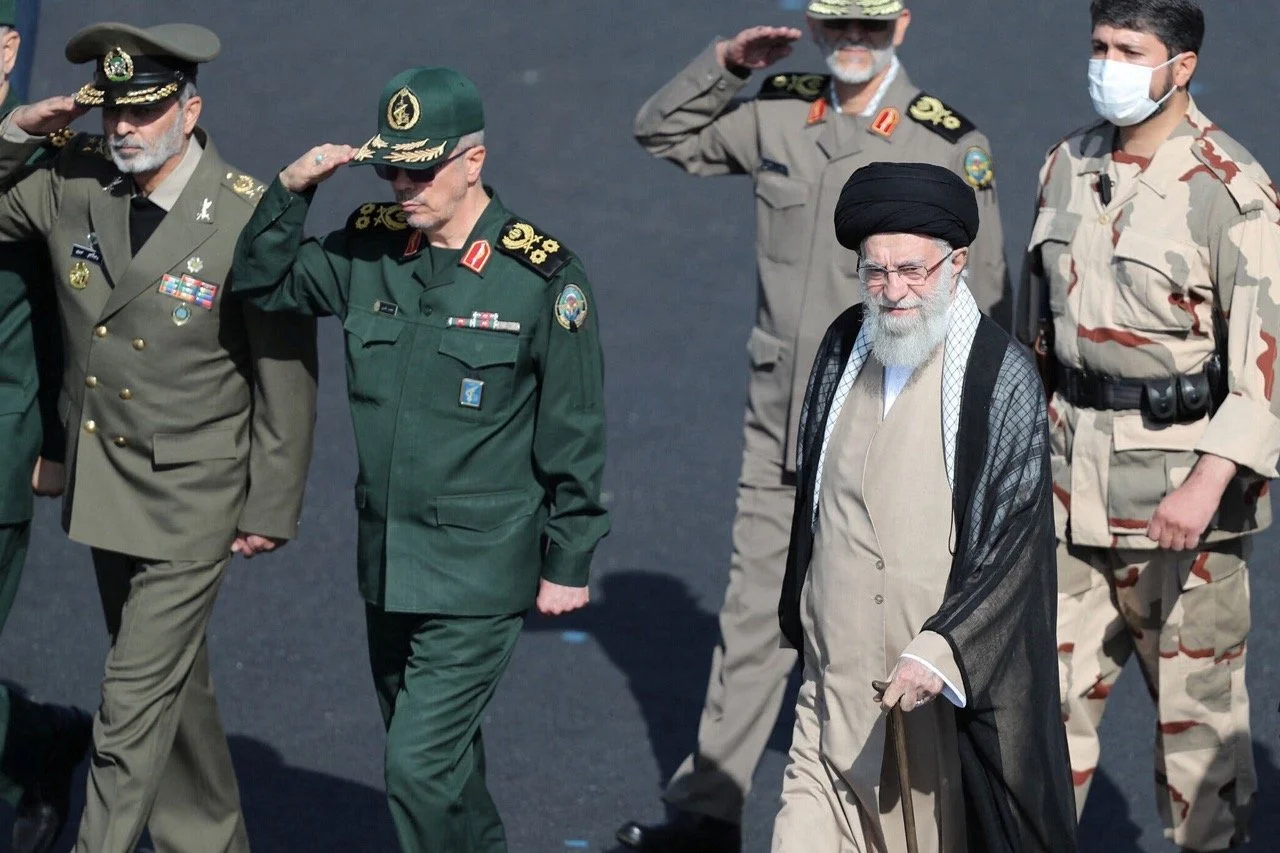
Iran’s “supreme leader”, reviewing the IRI’s armed forces.Credit.
© Reuters
Islamic Republic Militia Structure
The Islamic Republic operates a dual-structure armed forces system, comprised of the conventional military (Artesh) and the ideologically-oriented IRGC, alongside paramilitary militias and security and intelligence agencies. This structure was established after the 1979 Islamic Revolution largely to protect the regime from internal and external threats, with overlapping roles in defense, internal security, and ideological enforcement.
Below is a comprehensive list of key military, paramilitary, and security force groups, including short histories and purposes. Note that some entities are branches or subsidiaries of larger organizations, and the regime also employs proxy forces abroad (via the IRGC), but since we’re looking at these in the context of the current revolution and suppression, we’ll focus on core domestic groups.
1. Islamic Republic of Iran Army (Artesh)
Short history: Founded in the mid-1920s under Reza Shah Pahlavi as Iran's modern conventional army, it was restructured after the 1979 Islamic coup, purged of royalist officers, and integrated into the new Islamic framework. Despite this integration, there is still skepticism among some in the regime of the army’s loyalty to the Islamic Republic ideals. This is also one reason the exiled Crown Prince, Reza Pahlavi, recently called on members of the Artesh to defect and join the opposition - they are seen as significantly more likely to side with the Iranian people than the IRGC.
To counter potential anti-regime sentiment among the military, the Supreme Leader appoints ideological allies as representatives within their ranks, including the commander-in-chief. The Artesh played a major role in the Iran-Iraq War (1980–1988) and has since focused on professionalization despite competition from parallel forces.
Purpose: The Artesh serves as the primary conventional military for national defense against external aggression, including ground, naval, and air operations. It protects Iran's territorial integrity, borders, and sovereignty, with branches like the Ground Force, Navy, and Air Force emphasizing deterrence and warfighting.
2. Islamic Revolutionary Guard Corps (IRGC, also known as Sepah or Pasdaran)
Short history: Established in May 1979 by Ayatollah Ruhollah Khomeini shortly after the Islamic Revolution to counter potential coups from the Artesh and protect the new Islamic regime. It expanded quickly during the Iran-Iraq War, evolving from a small paramilitary group into a multifaceted force with economic, political, and military influence. The US designated the IRGC as a terrorist organization in 2019, and several other countries followed suit, including Canada, Australia, Bahrain, Saudi Arabia, Israel, Sweden, Paraguay, and Ecuador. The European Union also added the IRGC to its terror list in February 2026 following pres-sure from the international community and the Iranian diaspora after the crackdown on January 8-9 2026. The IRGC now numbers around 190,000–250,000 personnel.
Purpose: The IRGC is the “ideological guardian” of the revolution, with functions in internal security, asymmetric warfare, missile and drone programs, and exporting the revolution abroad. It maintains parallel branches to the Artesh (ground forces, navy, aerospace) and oversees elite units like the Quds Force for foreign operations and the Intelligence Organization for domestic surveillance and counterintelligence. Being the designated guardian of the Islamic ideals of the 1979 coup means the IRGC is generally more religiously fanatical, fundamentalist, and ruthless in its domestic suppression methods.
3. Basij Resistance Force (Basij-e Mostaz'afin, or Mobilization of the Oppressed)
Short history: Khomneini created this volunteer militia in November 1979 to mobilize the population to defend the revolution. The Basij was formalized in 1980, merged into the IRGC in 1981, and grew massively during the Iran-Iraq War. The Islamic Republic claims there are 20 million Basijis today, though active numbers are debated and range from 90,000 to 600,000 combat-capable members. It has been heavily involved in suppressing protests, including the 2009 Green Movement, 2019 uprising, and the current revolution. In protest and conflict footage out of Iran, you can often see Iranians pointing out Basijis wearing plain clothes to blend in with the protesters.
Purpose: The Basij is a paramilitary volunteer force for ideological indoctrination, social policing (enforcing Islamic regulations), riot control, and mass mobilization during crises or wars. It recruits from a number of demographics (youth, students, workers) and serves as a reserve for the IRGC, with roles in civil defense, propaganda, and monitoring dissent.
4. Law Enforcement Force (LEF; NAJA, or Faraja)
Short history: This group was formed in 1991 by merging the pre-revolutionary National Police, Rural Gendarmerie, and revolutionary committees into a unified force under the Interior Ministry (later directly under the Supreme Leader). The LEF evolved from post-revolution internal security needs, and is one of the Islamic Republic’s main security apparatuses for maintaining domestic stability. It played a major role in violently suppressing protests in the aftermath of the disputed June 2009 election, leading the United States to impose sanctions on the group in 2011 and 2012.
Purpose: Responsible for maintaining public order, law enforcement, border security (in coordination with IRGC), and countering smuggling, narcotics, and riots. It includes specialized units like anti-riot police and morality enforcement patrols, focusing on domestic stability.
5. Ministry of Intelligence and Security (MOIS, or VEVAK)
Short history: The MOIS was established in 1984 as the successor to the Shah's SAVAK (Organization of National Security and Information) intelligence agency, following purges and the need for a loyal apparatus to counter threats to the revolution. It has been linked to assassinations abroad and domestic crackdowns, and has overlapping roles with IRGC intelligence.
Purpose: The MOIS is responsible for intelligence gathering, counterespionage, and internal security operations to protect the regime from subversion, espionage, and opposition groups. It monitors dissidents, media, and foreign influences, often collaborating with the IRGC and Basij.
Additional Branches and Affiliated Groups
IRGC Quds Force: A special forces branch of the IRGC, created in the 1980s for extraterritorial operations; its purpose is to support proxy militias (Hezbollah, Houthis, etc.) and “export the revolution.”
IRGC Intelligence Organization: Formed in 2009 as a separate branch of the IRGC; it focuses on domestic intelligence and countering internal threats, rivaling MOIS.
Proxy forces employed by the Islamic Republic (Fatemiyoun, Zaynabiyoun): Afghan and Pakistani militias recruited and trained by the IRGC since roughly 2010 for operations in Syria and Iraq; they serve as expendable forces to extend the Islamic Republic’s influence abroad.
Economic and cooperative foundations ( IRGC Cooperative Foundation, Basij Cooperative) are affiliated but primarily handle welfare and economic control rather than direct military roles.
While each of these groups plays a distinct role in the Islamic Republic's power structure, during the current revolution they are working closely together to gather intelligence on opposition figures and those aiding protesters, and block external interference (primarily from the US and Israel) that could help Iranians overthrow the regime.
It would be remiss not to note that these organizations are widely despised by the Iranian people, viewed as the grasping tentacles of the Islamic Republic's octopus.
==========
Natalia Butler (nom de guerre) works in marketing, but her vocation is Iran. Passionate about the loving, deeply-alive nature of Iranians even in the face of decades of oppression. She has dedicated much of her time to studying Iran and has worked with opposition groups to help write legislation proposals, lobby for sanctions against the regime, etc. Natalia looks forward to writing articles from a cafe in Tehran very, very soon.
Our Woman in Tehran: Iran Is Ready… Give the Order, Prince!
I live in Iran, and I’m telling you right now: Reza Pahlavi has the support of roughly 80% of the Iranian people. We are ready to bring our Crown Prince back with our blood and our lives.
[First in a series from our confidential source in Iran. For obvious reasons, she is using a pen name.]
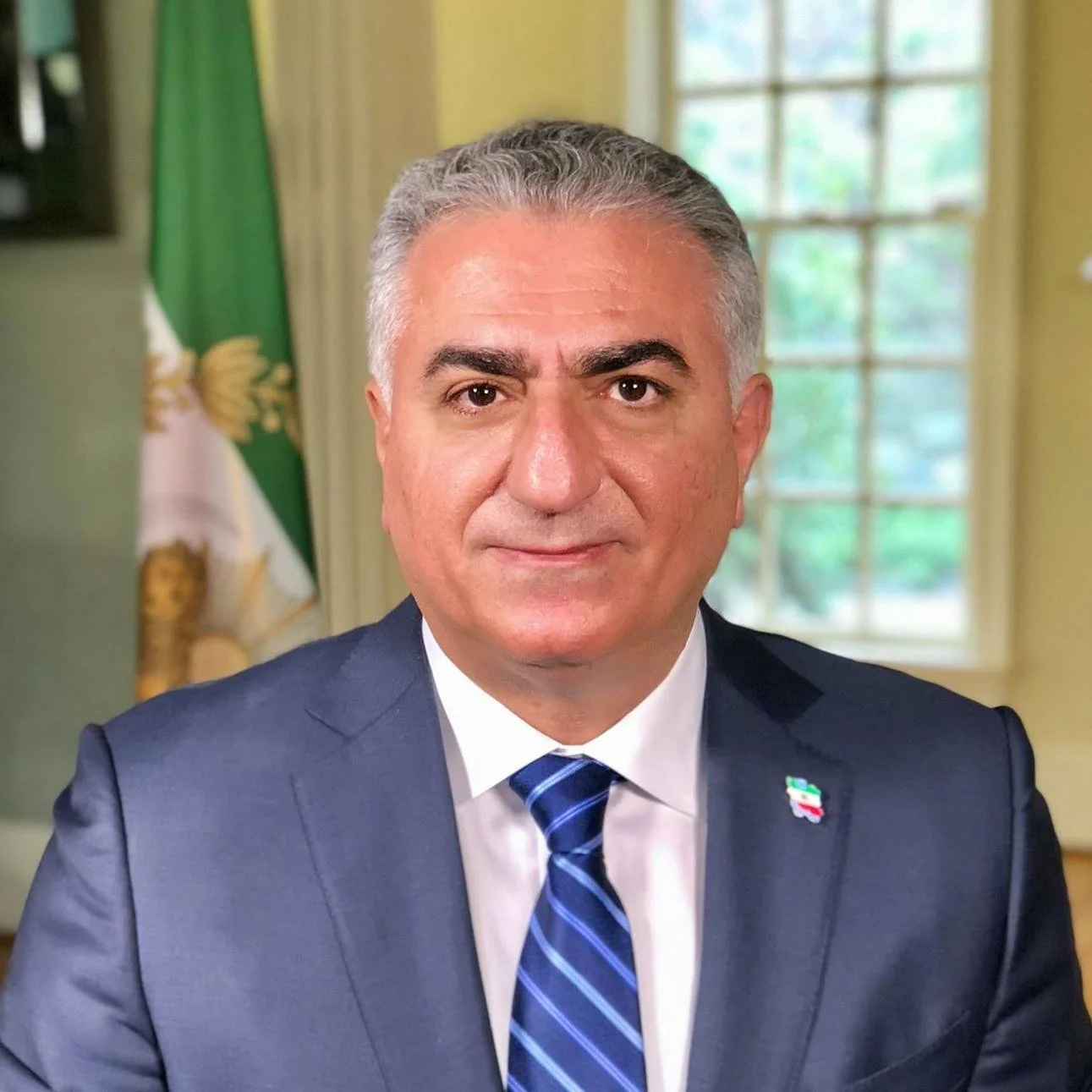
I live in Iran, and I’m telling you right now: Reza Pahlavi has the support of roughly 80% of the Iranian people. We are ready to bring our Crown Prince back with our blood and our lives.
The first open slogan in his support came in 2018 in Neyshabur, near Mashhad, when people chanted:
“Reza Shah, roohat shaad!”
(“Reza Shah, may your soul rest in peace!”)
Two years later in October 2019, the regime massacred 1,500 people in just three days - these protests were primarily sparked by high fuel prices, and the slogans were somewhat limited to discontent over the economy.
But everything changed during the Mahsa (Women, Life, Freedom) movement in 2022.
At the funeral of 10-year-old Kian Pirfalak (a boy from the Lor-Bakhtiari tribe who was killed by the regime) in Izeh, the crowd chanted:
“Iran shodeh amaadeh
Farmaan bedeh Shahzadeh!”
(“Iran is ready - give the order, Prince!”)
Why? Because the regime had begun trying to tear the country apart along ethnic lines. In Tehran they used shotguns that blinded people; in border regions they used live war ammunition against Kurds, Baluchis, and Turks. Suddenly leftists and separatists appeared, openly calling for the Baluch to join Pakistan, the Turks to join Azerbaijan and Turkey, the Kurds to create a greater Kurdistan, and even the Arabs of Ahvaz to join Saudi Arabia.
People watched this happen in real time and realized that the only force that has ever kept Iran united is the monarchy.
We remembered that under the Qajars ( the dynasty before the Pahlavis) Iran lost two-thirds of its territory. The Caucasus (Azerbaijan, Georgia, Armenia), Tajikistan, parts of Afghanistan… all gone. The Qajars even sold land to the Russian Tsar so they could vacation in Europe while the country starved.
That’s when the silent majority turned toward Crown Prince Reza Pahlavi. They saw him as the symbol of national unity and the heir to Cyrus the Great.
Over the past three years, we have watched every political dissident who supported the Pahlavi family disappear, be tortured, or be executed. Their Instagram posts, bedroom posters, and tattoos proved their loyalty to the monarchy. That’s when we understood that all the old accusations against Reza Pahlavi - that he was secretly dealing with the Revolutionary Guards, that he was taking money to stay quiet, etc. - were complete lies.
The Iranian diaspora played a huge role too. Channels like Manoto TV showed the younger generation what Iran looked like under the Shah: no hijab, freedom, prosperity, tourists everywhere. Today, 90% of Iranians living abroad are monarchists, and have kept the Lion and Sun flag alive for 47 years.
That’s why new slogans appeared:
“Reza Reza Pahlavi
Een ast shoaareh melli!”
(“Reza, Reza Pahlavi… It’s the national slogan!”)
“King Reza Pahlavi!”
(Specifically in English for Westerners listening to understand)
And this new year:
“Een aakhareen nabardeh,
Pahlavi bar migardeh!”
(“This is the final battle - Pahlavi is returning!”)
Three years ago, Yasmin Pahlavi (Reza Pahlavi’s wife) posted a slogan that shocked people at the time:
“Marg bar seh faased:
Mollah, chapi, mojahed!”
(“Death to the three corrupt: the mullah, the leftist, and the mujahid!”)
Today, almost everyone is repeating it.
The Iranian people have always been pro-Shah at heart. They were just afraid. They tried reformists for 25 years and finally realized they had been fooled. Now they see that only the monarchy can keep Iran whole.
So when someone tells you the monarchy has no support, tell them the truth. This movement didn’t happen overnight. It has been growing steadily for years, and it is now unstoppable.
==========
Ahoo Tehrani (pen name) is an Iranian nationalist and staunch supporter of the Pahlavi dynasty - the architects of modern Iran. She is deeply committed to Iran's proud heritage and future.
Ahoo has a bachelor’s degree in business administration, and has worked in many different sectors, including creative, energy, and media.
She is also a skilled graphic designer and has worked with various groups in the Iranian opposition for many years, helping promote the message of a free Iran.
In her spare time, she cares for dozens of stray dogs and cats around her city, helping feed, raise, and provide medical care for Iran’s vulnerable animals.
Ahoo is a proud voice for Iranian identity, monarchy, and principled conservatism.
Iran’s “Liberty or Death” Moment
Iranians are facing a point of no return with striking resemblance to the birth of the United States. We should be cheering for them.
Whether from weariness over decades of Middle Eastern conflict, financial concerns at home, or an isolationist sense of "this isn't our fight," Americans are not nearly as invested in the outcome of the current Iranian Revolution (not to be confused with the 1979 Islamic coup) as this movement deserves. Even if there exists an unfortunate ambivalence toward Iranians winning freedom for their own right, Iranians are facing a point of no return with striking resemblance to the birth of the United States. We should be cheering for them.
We are witnessing Iran’s own “give me liberty, or give me death” moment. After 47 years of abject horror and brutality under an Islamic Republic with no regard for its own people, Iranians have finally reached the point where their desire for freedom outweighs their fear of the regime. The most devastating threat to the mullahs is not foreign military intervention (though, to be clear, The Free Iran Project strongly advocates for this); it’s the Iranians’ irreversible fearlessness.
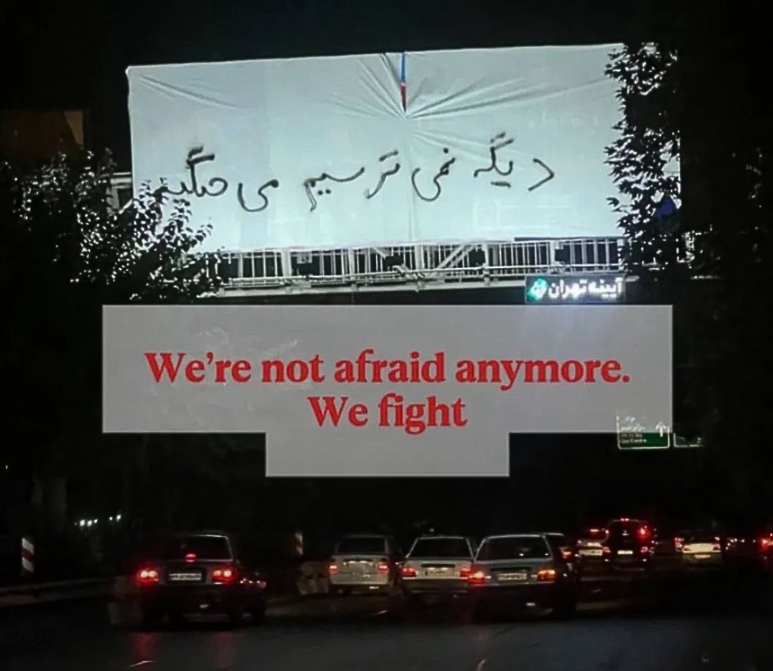
“We’re not afraid anymore. We fight.”
Sign on overpass in Iran with overlaid translation.
Mirrored Turning Points: 1775 and 2026
Borrowing famous lines from history can sound like a meme: consumable, quickly satisfying, and vague enough to use for any struggle that looks heroic. But the power of “give me liberty or give me death,” and its parallel to Iran, comes from a very precise turning point: the moment when a population begins to speak and act as though there is no further room for debate. Every detail may not be settled, but they have crossed the moral threshold of accepting the risk. Just like the Americans in 1775, Iranians understand that the petitions, patience, and accepting the regime's laughably superfluous concessions after previous uprisings amount to no more than surrender.
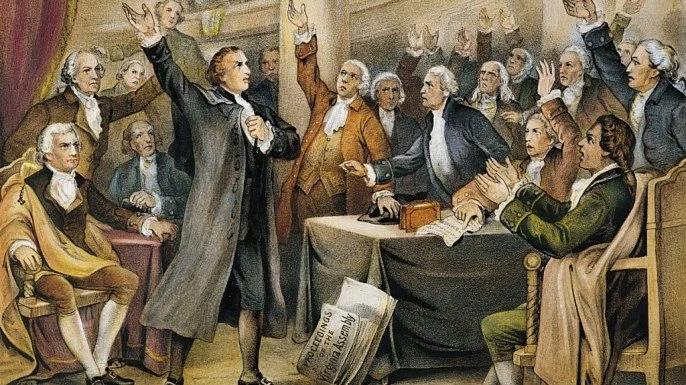
Artist rendition of Patrick Henry giving his famous, galvanizing speech in 1775, Virgina
Iran is not reenacting 1775, of course; aside from very different histories and cultures, Iranians are objectively under a great deal more oppression than the American colonies ever faced. However, both moments are a function of the same political mechanism: when a ruling system becomes illegitimate, it can use coercion to silence people, but it can’t re-create belief.
What Did This Speech Actually Signal?
The famous line is attributed to Patrick Henry in his speech to the Second Virginia Convention in March 1775. Virginia’s political leadership was confronting dissolutions of colonial assemblies, intense coercion, and the realization that “more negotiation” was just a delay tactic (sound familiar?) while imperial controls tightened around them. Henry’s speech was really a push to move beyond protest and prepare for conflict, and to abandon the fantasy that a few more rounds of pleading would restore the liberties they’d already lost.
It also matters that there is no verbatim transcript of Henry’s speech, and the most widely circulated version was reconstructed decades later. This does not weaken its relevance, but strengthens it if we use it correctly.
The beauty of “give me liberty, or give me death” is that it reduces the political argument into an ethical binary: not “would you like more freedom,” but “is life worth living without freedom?” This forces us to stop shielding a historic moment in ambiguity. With the binary, we must pick a side and accept the consequences of choosing. In that context, “liberty or death” is a population stepping off a precipice, because the cost of staying on the cliff is higher than jumping into the void below.
In the Iran parallel we are not claiming the same sequence of events, actors, or institutions. We argue that Iranians are at a similar threshold of moral clarity, where reform is delay and the path toward freedom leaves no room for compromise.
When Fear Stops Working
The Islamic Republic has always relied on a twisted, fear-based version of the social contract to stay in power: comply, keep your head down, and you may be allowed a life. A constrained, surveilled, and spiritually policed life, but maybe you’ll live to old age and not spend most of it in a political prison. The function of the IRGC is to enforce this system, brutally, which is why many Iranians hate them even more than Khamenei.
When this social bargaining collapses, authoritarian regimes do not immediately fall, but they do typically grow more violent. They are an animal backed into a corner. But the collapse changes something irreversibly: people stop acting as if the system that cares nothing for its people can be bargained with.
We’ve seen this in the past month with the massive, nationwide protests in Iran, the staggeringly violent IRGC crackdowns amid an information blackout, and then the regime’s declaration that they’d restored normality (which would be amusing if it weren’t both horrific and false). But unlike the Green Movement in 2009, Bloody November in 2019, and Mahsa Amini (Women, Life, Freedom) uprising in 2022 that were suppressed and reverted to more or less the status quo, the repression and brutality against the current revolution are unintentionally persuading more citizens that there is no going back.
“We are past the point of just wanting to be free; we want to see them bleed. The IRGC started this, and we will finish it and get rid of this cancer. There is no going back, because the way back is filled with blood.”
This is also why we should read the regime’s obsession with narrative control (internet blackouts, censorship, forced confessions, propaganda) as a sign of brittleness. It is the behavior of a regime trying to rebuild fear because belief is entirely gone.
The recurring theme among Iran coverage now is that the Islamic Republic’s options are narrowing, and while they respond with force and emergency measures, the people have only become more angry and determined. A state cannot easily regain legitimacy once the majority of its citizens no longer take it seriously.
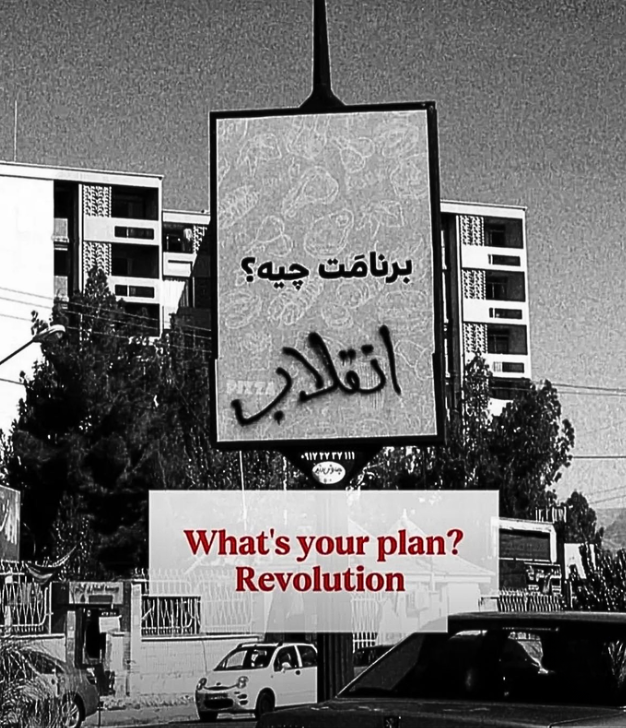
Graffiti reply of “Revolution” to advertising billboard asking, “What’s your plan?”
Why Revolutions Speak in Absolutes
Revolutions speak in absolutes because they do not begin in hope or optimism, but in refusal. When a population concludes that the system ruling it is unreformable, that further debate only entrenches abuse, and that moral clarity is no longer optional but necessary for survival.
Absolutes do three things at once.
They convert private suffering into public purpose. Millions of isolated humiliations - homes raided, dehumanizing interrogation and torture tactics, or forced confessions on television - become a shared story.
They untangle complexity into the ethical binary we discussed earlier. This is not because revolutionaries are naïve, but because the regime will often use complexity and subterfuge as a trap to delay, strengthen, and oppress: “There are pros and cons,” “it’s not that simple,” “don’t destabilize.” Absolutist language sidesteps the trap. It says: the foundational issue is not complicated. Human beings are not property of the regime.
It creates a test for outsiders: Where do you stand when neutrality is complicity? The test is aimed not only at domestic fence-sitters, but also at the comfortable, distant Western observers whose complacence leads them to interpret Iran as a tragic, endless regional story rather than a live contest over human agency by a people fighting for the same rights they themselves enjoy.
This is one area where diaspora voices can help the most. Not as stand-ins for Iranians inside the country, but as a way to translate urgency to audiences that default to fatigue amidst a blithely indifferent news cycle.
Four Parallels Worth Taking Seriously
Iran’s “liberty or death” moment in a nutshell. Aside from videos of protesters shouting, verbatim, “I will die for a free Iran,” “We will be free or die,” there are other parallels that should catch the American ear.
Legitimacy crisis. In both the American Revolution and Iran today, the people generally stopped believing the ruling power can be reasoned with. They realized the regime is fundamentally incapable of responding to rational argument, and begin treating it as the enemy. That shift is dramatic in Iranian unrest. It’s not a narrow, one-issue protest with specific demands (economic woes, etc.), but as a challenge to the regime’s right to rule.
Repression as accelerant. Coercion can suppress demonstrations, but it also highlights the moral stakes. Every murder, arrest, forced confession, or blackout is a message: the regime knows it cannot win a fair contest..
Information networks. The American revolutionaries had committees, pamphlets, and meeting houses. Today’s dissidents have encrypted channels, diaspora media, and viral testimony, and the IRGC responded with digital suffocation because information is oxygen.
The “after” question. Revolutions become real when they can speak in future tense. The future doesn’t have to be perfectly mapped in advance, but people will not risk everything for an empty abstraction, especially if there’s danger of a power vacuum. They need a credible picture of what comes after the revolution, even if it is transitional..
The Limits of Comparison
A Revolution in the 1700s in North America and one in the Middle East in the digital age are certainly not going to dovetail completely.
First, the American Revolution was a colonial fracture, while Iran’s struggle is internal regime change. The institutional terrain is very different. Colonial assemblies and elites had footholds that dissidents inside Iran cannot easily maintain under surveillance and mass imprisonment.
Second, geopolitics surrounds Iran’s context in a way 1775 Virginia did not face at the same scale. Regional conflict, proxy dynamics, sanctions framework, and global energy and security calculations all shape possibilities and incentives.
Third, the risk is categorically different. Those participating in anti-British activities pre-1775 did so at great personal risk, but in Iran’s modern landscape of digital tracking, forced confessions, almost guaranteed torture, and often execution, Iranians’ fear of physical harm is almost certainly higher.
These differences matter because they change timelines and tactics. But they don’t erase the core parallel: when a regime is deemed unreformable by the people living under it, removing it becomes the only option.
Speaking to the West: Clarity, Controversy, and the Price of Attention
Iran commentators and diaspora members often sound “too certain” to Western audiences trained to distrust a binary. But what breaks through ambivalence more than certainty? If any issue has been overcomplicated by endless political discourse and dissection, it’s Iran. It truly is as simple as supporting either the Islamic Republic, or supporting the people. There can be no freedom for the people while the Islamic Republic exists.
Goldie Ghamari is one example of a diaspora political figure who’s built her public persona around confronting the Islamic Republic and advocating for hard lines that Western institutions often avoid. That she’s a former member of Ontario’s legislature gives her a different kind of legitimacy in Western discourse - she can speak in the language of policy, law, and public institutions, not only personal testimony.
When reading about Iran, it’s critical to look for voices that:
Only entertain regime change, not reform; reform is a Islamic Republic talking point, repeated ad nauseum
Have contact with friends, family, and associates inside Iran in the opposition.
Support a centralized transitional leadership. Right now, this is Crown Prince Reza Pahlavi. Even for those who typically don’t believe in monarchy, if the Iranian people chose him, he represents the quickest, cleanest path toward a peaceful transition of power when the regime falls.
A Revolution Needs a Future Tense
In January 2026, Reza Pahlavi framed the moment as a national revolution and positioned the Islamic Republic as an occupying force rather than a legitimate government. This was a brilliant way to shape public perception and discourse, and helps to further delegitimize the regime.
When Western governments discussed regime change in the past, a frequent hesitancy was the possibility of a power vacuum similar to that in many of the Arab countries whose leaders fell during the Arab Spring. What they fail, repeatedly, to understand, is that Iran is not a country that was created by foreign powers in the last century around historically warring disparate factions, with arbitrary borders. Persians have over 3000 years of history binding them to the land and to each other, which is what’s protected them from Islamization despite being under theocratic rule. This deep cultural pride, plus a central, recognizable, and galvanizing figure in Reza Pahlavi, makes the risk of a power vacuum significantly less likely.
Also unlike the Arab Spring, the aim of the Iranian revolution is not simply the removal of their oppressors. The overarching goal is a bright future they can never have under the current theocracy, and getting rid of the mullahs is the means to that end. Iranians have imagined and planned for this better future for nearly fifty years.
Liberty Isn’t a Slogan
The word “liberty” meant something specific to the American revolutionaries: representation, consent, and the right not to be governed by decrees from across the world. In Iran’s revolution, liberty is arguably more intimate and more total: bodily autonomy, freedom of belief, freedom from ideological policing, and the right to live without being collateral damage from the government’s totalitarian ambitions.
But the soul of the idea is the same. Liberty, in both contexts, is simply that a human being is not the property of the state. This is why “liberty or death” resonates even with its imperfect historical record. It names the exact point when a group of people decide that survival without dignity is not survival.
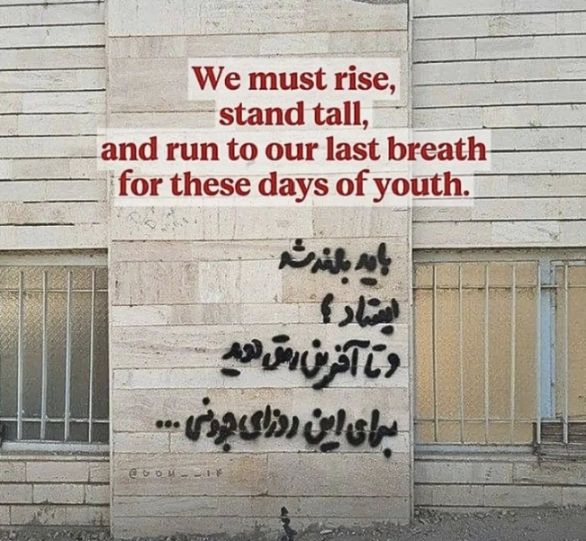
“We must rise, stand tall, and run to our last breath for these days of youth.”
We Didn’t Do it Alone
Although Americans fought the lion’s share of the Revolution themselves, they did not do it alone. Foreign recognition, material support, and strategic pressure on the British Empire significantly helped tip the scales - not because others won the war for them, but because intervention made freedom possible at a decisive moment. Why should Iran’s revolution be any different? They are sacrificing their lives in the name of freedom; do they not merit help?
Iranians are doing the most dangerous work themselves, at astronomical cost. What they need from the West is not hand-wringing, neutrality, or calls for restraint, but moral clarity and decisive action that matches the stakes. History does not judge these moments by how cautiously foreign powers hedged, but by whether they stood with the people who had already accepted the risk. When a nation reaches its liberty-or-death moment, the only unforgivable choice is pretending it isn’t happening.
What We Owe the People Who Take the Risk
My fellow Americans, please don't demand that that the Iranians’ struggle fit our preferences: nonviolent but effective, principled but strategically perfect, heroic but not destabilizing, inspiring but not morally demanding. It’s not our place to lecture them on their methods or encourage restraint.
What we should give Iranians is recognition that they are fighting for the same fundamental rights Americans consider universal, and that they are doing so under brutality most of us will never experience. We owe them acknowledgement that the Islamic Republic is not a legitimate government in conflict with its people, but an occupying regime holding an ancient nation hostage.
Neutrality in this revolution is abdication, not diplomacy. The Iranian people have already crossed the line where fear no longer governs their behavior, so outsiders should not pretend the moral question remains unsettled. History does not remember who urged caution, and in this case, urging caution is akin to condemning Iranians to death. It remembers who recognized the tipping for what it was, and chose to stand on the right side of it.
Iranians are in their “liberty or death moment,” and we cannot look away.
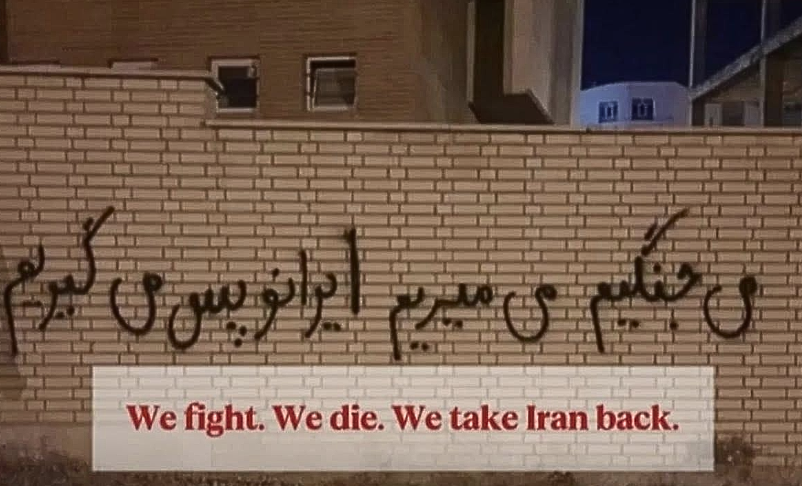
“We fight. We die. We take Iran back.”
==========
Natalia Butler (nom de guerre) works in marketing, but her vocation is Iran. Passionate about the loving, deeply-alive nature of Iranians even in the face of decades of oppression. She has dedicated much of her time to studying Iran and has worked with opposition groups to help write legislation proposals, lobby for sanctions against the regime, etc. Natalia looks forward to writing articles from a cafe in Tehran very, very soon.
Iran 2026: A Military & Strategic Assessment
Professional militaries do not act recklessly; they operate on the premise of overwhelming force projection, utilized with top tier proficiency.
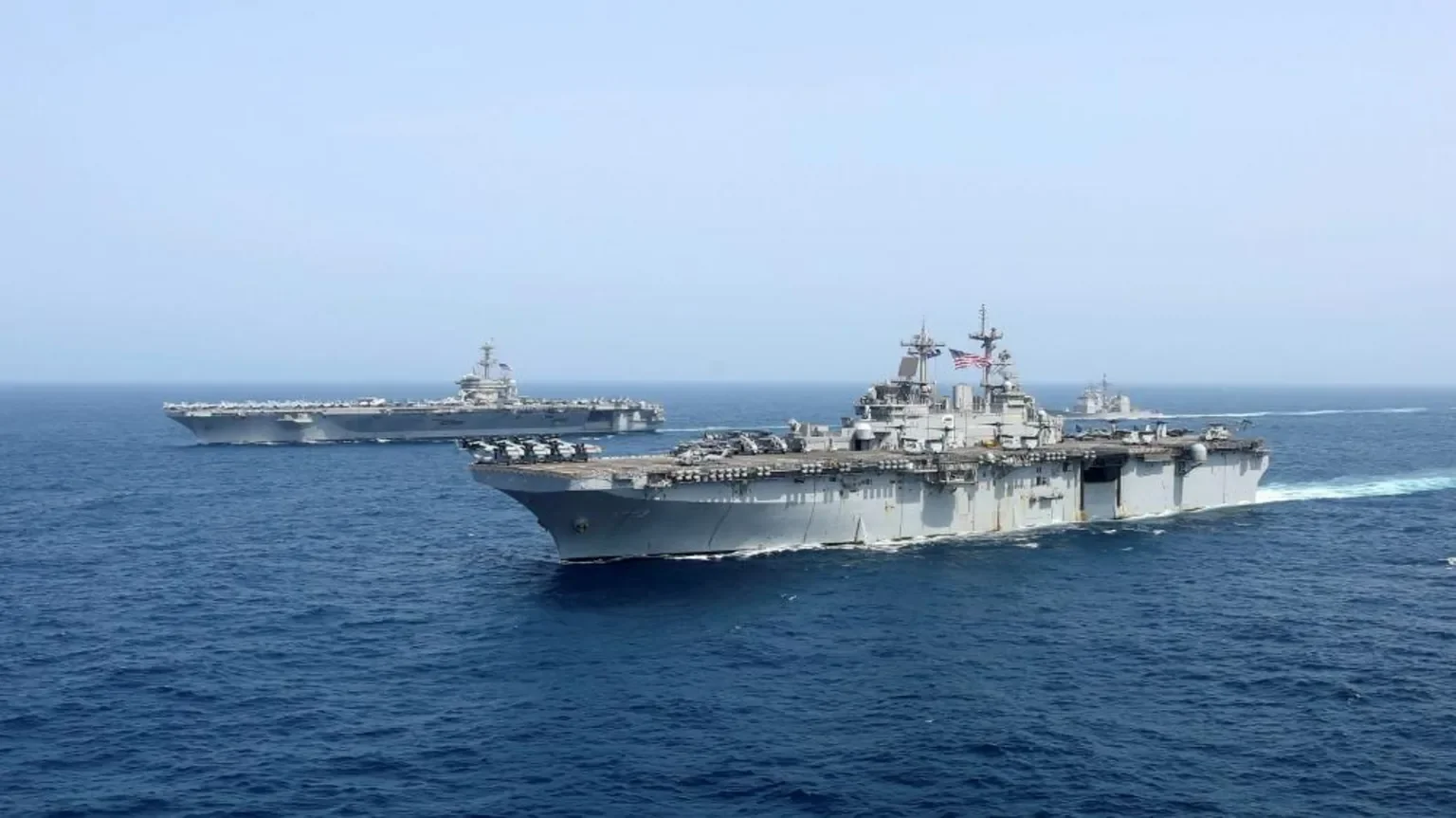
Decades of Intelligence Prep Meet Escalating Readiness
Since at least 1979, the Islamic Regime occupying Iran has been a consequential ground source for Western intelligence, with America's CIA, Britain's MI6, France's DGES, Germany's BND, Australia's ASIS, and others supplying strategists and analysts with a full spectrum of operational blueprints, from targeted engagements to total overthrow. Out of them all, the Israeli Mossad has quite definitively led the field in penetration and results.
These intelligence products have been meticulously archived: filed away for the proverbial rainy day, ready for the moment when leaders must “break glass in case of emergency.” Preparation for an operation did not begin a few weeks ago when Iranians poured into the streets once again, demanding an end to the 47-year occupation and the return of the Shah. This has been in the planning stages for decades.
So what factors would strategists be calibrating today when deciding which scenario to retrieve from the vault, assess probabilities of success, and allocate strategic assets?
IRGC adaptation post-conflict: What lessons has the Islamic Revolutionary Guard Corps drawn from the 12-Day War, and how have they revised their defensive doctrines and force posture in response?
Foreign asset transfers: Have new Russian or Chinese systems (missiles, drones, electronic warfare capabilities, or other platforms) recently reached IRGC hands, and how do they alter the threat picture?
Point of no return on the ground: Are there visible indicators (mass defections, collapse of internal security, widespread refusal of orders) signaling that the regime has crossed an irreversible threshold, beyond what airpower alone can resolve?
Post-regime transition design: What does a viable transition look like? How can external actors shape conditions to produce an acceptable outcome rather than a new power vacuum or competing factions?
Kinetic realities in collapse: In the event of sudden regime disintegration, what are the on-the-ground dynamics (fragmentation of command, looting of arsenals, rogue units, refugee flows, or opportunistic militia action) that would demand immediate response?
These are just a handful of the evolving variables under constant review at the highest levels of strategic planning. As assessments shift, so do the corresponding requirements for strike packages, defensive postures, and supporting assets.
When we see the US and its NATO allies positioning an abundance of multilayered missile and drone defenses, it suggests the expectation of a massive counteroffensive to any Western strike. There’s also a lead time to be expected as air defenses are brought online and oriented, as well as defense coordination drills between multinational coalition forces to maximize efficiency while preparing to avoid friendly fire.
That is how you end up with days turning into weeks.
As the objectives become more robust, more assets get deployed and prepped. Varying scenarios are trained intensively. Professional militaries do not act recklessly; they operate on the premise of overwhelming force projection, utilized with top tier proficiency.
The Target Hierarchy: From Low-Priority Militias to Core Regime Assets
What does the potential target bank of Islamic Republic assets include?
Air defenses including, but not limited to, MIGs, radar, air defense batteries
The lowest-priority targets are foreign militias. (These are the Iraqi, Pakistani, Palestinian militias you see in pick up trucks shooting at unarmed civilians.)
The next level would be Basiji and local police. These target areas have nodes in their operational bases
Communication nodes
IRGC provincial bases, barracks, weapons depots
Provincial government facilities
IRGC military installations for national command and control
Regime targets including individual people and government offices
Ballistic missile and drone facilities including manufacturing and stockpiles, as well as launcher infrastructure
Nuclear program and stockpiles of material
Each target presents its own logistical considerations, platform requirements and layered strategy for where it lies in the targeting progression. The order listed is not an implication of processes, but a preliminary look into upscaling from the lower levels to upper echelons.
To ensure all necessary capabilities are in the theater and ready to achieve their objectives, we have observed A10s, F15s, F18s, EA18Gs, F16s, F22s, MC-130J, the Rivet joint platform, E11A, WC-135R Constant Phoenix platforms, and various other assets.
The operational collective abilities include air defense suppression, ground troop neutralization, surface-level target elimination, "bunker busters," intelligence gathering and communication disruption, aerial communication coordination, uranium detection and a host of other capabilities.
This does not account for the carriers, destroyers and submarines armed with tomahawk missiles or the B2 and B52 platforms that don’t need to be stationed in CENTCOM to have range for operational usage.
What About American Ground Troops?
As many, including The Free Iran Project, have argued, Iran is neither Iraq nor Afghanistan, and its current situation is not the same as those countries before the respective wars that ensued within their borders.
The discussion of ground troops (“boots on the ground”) requires an important distinction when considering viability. When people speak of boots on the ground, they’re referring to infantry, mechanized divisions, and the like. This option is very unlikely to manifest in Iran - chances are likely just above zero. Iran represents both an extremely difficult topography and an immense land mass. Adding another complication, the regime has complex tunnel networks and bases hidden in mosques and hospitals, which would present negative optics for the military in western media. Words like “quagmire” spring to mind, and the problem is one Trump will probably wisely avoid.
Conversely, an infiltration by special forces to achieve high-value objectives, followed by a clean exfiltration, is a viable strategic consideration. Small teams with clear, narrowly-scoped missions can leverage the chaos and degraded situational awareness from airstrikes to move in and out effectively.
Beyond Deterrence: The Signal of Imminent Kinetic Action
This level of military buildup and readiness goes beyond routine deterrence; it signals serious intent. Paired with coordinated diplomatic pressure and escalating economic measures against the regime, the conclusion is quite clear: kinetic options are on the table. Ground developments have made a robust, adaptive target-acquisition network essential throughout CENTCOM's area of responsibility.
Preparations have advanced to mature stages, coinciding with a hardening global stance - the regime is illegitimate, and that illegitimacy provides the legal basis for decisive action. Time is running short, though, and this period of tense anticipation will not persist indefinitely.
==========
Moshe ben Yehudah (pen name) is a geopolitical and military analyst, focusing on the Near East, North Africa, as well as Central and South America. He is a veteran of the IDF, including combat service in urban, modern warfare.
Owning the Revolution
The French role in our own American Revolution screams out to be learned from, as Iranians continue to bravely fight for their freedom.
Cave-aged cheese, the 1967 Citroën DS-21 (convertible, of course), and the American Revolution all show that on rare occasions, however much it might pain us to admit, there is value in looking to the French for guidance. While I’d prefer to talk about the great fromagers or hydropneumatic suspension, the French role in our own American Revolution screams out to be learned from, as Iranians continue to bravely fight for their freedom.
The average American has no idea that in the years immediately following the Declaration of Independence, the French provided military advisors, most of the gunpowder, tens of thousands of arms, and hundreds of pieces of artillery to the Colonists’ cause. Most serious military historians admit that Yorktown, where the British met their defeat, would have been impossible without Admiral de Grasse and the French fleet.

Louis Charles-Auguste Couder, “Siege of Yorktown” (1781)
Can America do for Iranians what France did for Americans? An honest answer to that question requires a brief detour to address the strategic wreckage of our past record.
In Afghanistan, where I served, we lightly dislodged al-Qaeda and the Taliban and set up a feckless puppet regime in Kabul. This unleashed the Haqqani shadow state, a mafia-jihadist network arguably worse than what had come before.
In Iraq, there was no obvious replacement for Saddam Hussein. Even worse, we disbanded and destroyed the state’s infrastructure and enforcement mechanisms, sending thousands of humiliated, trained military to nurse grievances with idle hands. That power vacuum handed influence to instructors of terrorism like AQI, ISIS, the Badr Organization, Kata’ib Hezbollah, and others.
In Libya, high on the Arab Spring, we ignored that the rebels were worse than the dictator. The state failed to such an extent that instead of a proliferation of liberty, we got open-air slave markets.
We must learn from our mistakes—but we mustn’t overlearn from them. Iraq, Afghanistan, and Libya should serve as deadly lessons, not paralytics to positive action.
The recent actions in Venezuela suggest at least some lessons from our failed interventions have been absorbed:
1. Quick, decisive action.
The longer you intervene, the more things can go sideways.
2. Enable; don’t invade and occupy.
It sends the message that America owns the revolution.
3. Prevent a vacuum.
While it may feel more satisfying to root out every last bad actor, the state must function and incentives must point toward stability.
Not only must we learn from the failures of previous interventions, we must also learn from success.
The French deserve more credit for their pivotal role in America’s revolution. But the lack of recognition is a feature, not a bug. A people must own their revolution. George Washington is our founding father, not King Louis or the Marquis de Lafayette.
Iran is unique in that Reza Pahlavi, the Crown Prince in Exile, enjoys unusually broad-based support among the people inside Iran and across the diaspora. He has also laid out realistic plans on transitioning from revolution to a reformed government.
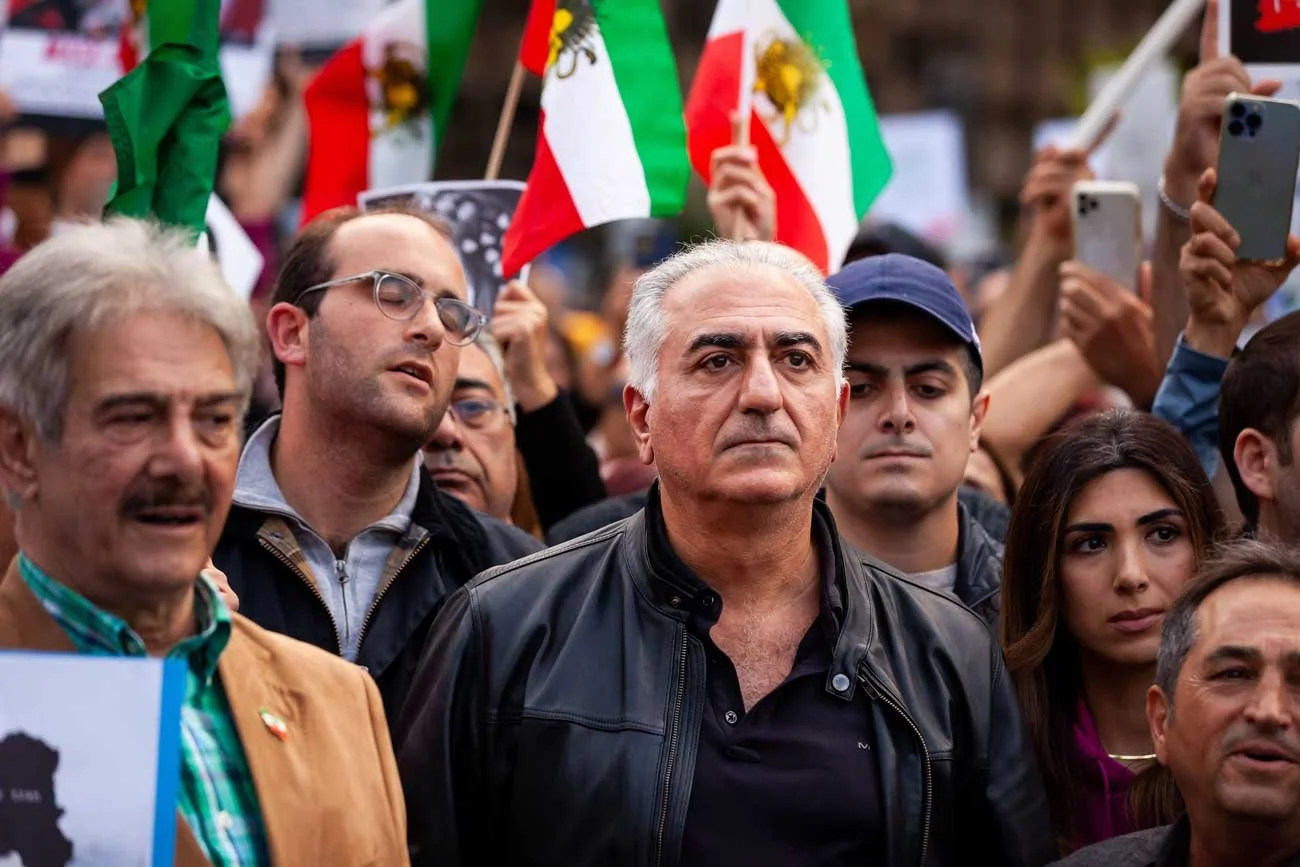
Crown Prince Reza Pahlavi in the September 2022 protests in Washington DC against the killing of Mahsa Amini.
Photo : Allison Bailey
As Edmund Burke observed, the American Revolution worked because it was conservative in nature, not transformative. It was about maintaining bottom-up culture, institutions, and rights, not tearing society down.
Iran is not Afghanistan, nor Iraq, nor Libya. It is a country with a pluralist culture developed over centuries, a pro-Western orientation, and institutional knowledge — all within living memory. A global network of Iranian expats with education, money, and a strong desire for a conservative revolution are waiting in the wings.
Unlike many countries in the region, Iran isn’t defined by a strongman holding down an anti-Western, religiously fanatical population. In Iran, in fact, it is the opposite.
Could intervention go poorly? Of course. Some risks are known. Operations can go sideways. No plan survives first contact with the enemy.
But most bad outcomes here are no worse than the status quo: A millenarian regime of Twelver Shias seeking a nuclear bomb while funding, arming, training, and providing intelligence for insurgent terrorist groups in Iraq, Syria, Lebanon, Yemen, and Gaza (to name a few).
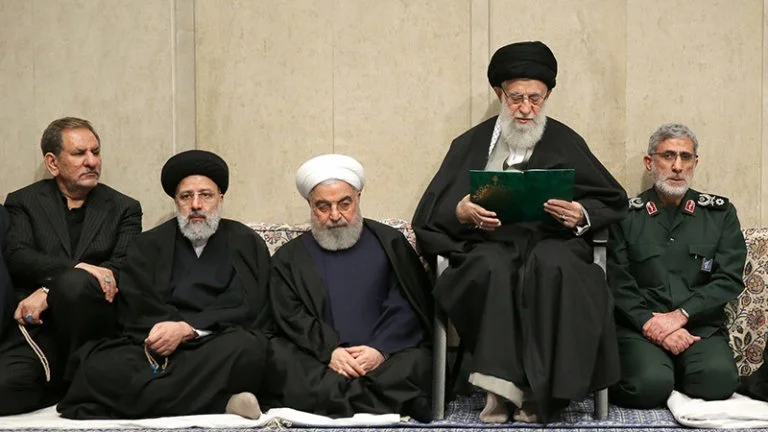
“Supreme Leader” Khamenei, seated in chair, at the wake of Ghasem Soleimani.
The potential upsides? To name a few:
Freeing an educated population of 90 million to become productive members of a global economy;
Ending the threat of a nuclear Iran;
Cutting off discounted dark-fleet oil to China (hampering its ability to project power abroad and compete in the AI race);
Providing LNG to Europe and undermining Russia’s revenue stream that funds their war in Ukraine;
Increasing the chance of peace in Gaza, stability in Lebanon, and maybe even an end to the civil war in Yemen;
Decreasing the power of Iraqi militias;
Allowing the United States to complete its pivot back to the Western Hemisphere.
You may come away from this unconvinced how, or even if, we should help Iran.
But one thing should be clear: knee-jerk denials of help aren’t a sign of learning from Iraq and Afghanistan. Wisdom in complex and grave foreign policy decisions must weigh the lessons of failures and successes. It must take into account the risk of action, but also the risk of inaction and a closing window of opportunity.
It must, of course, be sober about what could be lost—but it must also account for what can reasonably be gained.
==========
Robert Haglund is a talk radio producer, former Arabic cryptologic linguist for Air Force Intelligence, and a veteran of the War in Afghanistan. He is also the co-author of “Rescuing the American Project: How Nationalism and Immigration Will Revive the Republic.”
Rallies in Support of the Protestors in Iran: Jan 30 - Feb 1, 2026
Although it may seem the situation in Iran has quieted down, that couldn't be farther from the truth.
Although it may seem the situation in Iran has quieted down, that couldn't be farther from the truth.
This weekend, rallies in support of the protests are being planned in the US and around the world.
Using the information gathered by Goldie Ghamari, we've compiled a list below by date (Fri, Sat and Sun), and then:
COUNTRY > State / City > Location > Time
NOTE: We've done our best to ensure this list is correct, but please do your due diligence if you're planning on attending, including assessing safety.
Ms. Ghamari also provided a link to a series of images of each rally on a Google Drive account that we'll link to in the comments.
If you do attend, pictures and videos of the event to share and tag would be amazing!
Long Live a Free Iran!
==========
Jan 30
CANADA > Ottawa > Tabaret Hall > 11:30a
FRANCE > Grenoble > Place Victor Hugo > 18:00
GERMANY > München > Gärtnerplatz > 18:00
PORTUGAL > Lisbon > US Embassy > 15:00 - 17:00
USA > Arizona > Tempe > 452 E University Dr > 4 - 6p
USA > California > San Diego > Candlelight Vigil, Sufi Restaurant > 6 - 8p
USA > Texas > Houston > 5116 Westheimer Rd > 4 - 6p
USA > Texas > San Antonio > 2222 N Alamo St > 6 - 8p
-----
Jan 31
AUSTRALIA > Adelaide > Parliament of South Australia > 6p - 8p
AUSTRALIA > Brisbane > Reddacliff Place > 4 - 6p
AUSTRALIA > Perth > Langley Park, East Section > 18:00 - 20:00
AUSTRALIA > Sydney > Town Hall > 5 - 7p
AUSTRALIA > Wollongong > Crown St Mall > 5 - 7p
AUSTRIA > Klagenfurt > Alter Platz > 14:00 - 16:00
BELGIUM > Brussels > Av. Franklin Roosevelt 15, 1050 Ixelles > 14:00 - 16:00
CANADA > Halifax > Victoria Park > 13:00
CANADA > Montreal > Atwater Metro > 14:00 - 16:00
CANADA > Saskatoon > GSA - College Dr & Wiggins Rd > 1p
DENMARK > Aalborg > Gabels Torv 3 > 12:00 - 13:00
DENMARK > Copenhagen > Rådhuspladsen > 12 - 17:00
DENMARK > Odense > Gråbrødre Plads 1 > 13:00 - 14:00
FRANCE > Strasbourg > Pl. du Corbeau > ??
FINLAND > Vaasa > Vaasa-Tori > 16:00 - 19:00
GERMANY > Berlin > Kurfürstendamm / Joachimstaler Str. > 14:00 - 18:00
GERMANY > Düsseldorf > Central Station > 14:00 - 17:00
GERMANY > Düsseldorf > Landtagswiese > 17:00 - 19:00
GERMANY > Frankfurt > Goetheplatz > 15:00 - 18:00
GERMANY > Hamburg > Car Rally, Glacischaussee > 15:00
GERMANY > Hamburg > Kurt-Schumacher-Allee 10 > 14:00
GERMANY > Hannover > Platz der Menschenrechte 1 > 11:00 - 14:00
GERMANY > Karlsruhe > Kronenplatz > 4 - 6p
GERMANY > München > Gärtnerplatz > 16:00
GERMANY > Nürnberg > Fürther Strasse 104 > 14:00 - 16:00
GERMANY > Stuttgart > Lautenschlagerstrasse > 14:00 - 17:00
HUNGARY > Budapest > Szabad sajtó út & Váci u. > 15:00
ITALY > Palermo > Piazza Verdi > 16:00
ITALY > Rome > Piazzale Ugo La Malfa > 14:00
NETHERLANDS > The Hague > Malieveld > 14:00 - 16:00
NEW ZEALAND > Auckland > Western Park, Ponsonby > 6 - 7p
NEW ZEALAND > Christchurch > Bridge of Remembrance > 4 - 5p
NORWAY > Bergen > Festplassen > 12:00 - 13:00
NORWAY > Oslo > Railway Square > 16:15
NORWAY > Stavanger > Torget > 12:00 - 14:00
SCOTLAND > Glasgow > Kelvingrove Museum > 12:00
SPAIN > Barcelona > Placa de Catalunya > 17:00
SWEDEN > Gothenburg > Götaplatsen > 13:00
SWEDEN > Karlstad > Stora Torget > 13:30 - 15:30
SWEDEN > Malmö > S:t Johannesplan > 14:00 - 16:00
SWEDEN > Stockholm > Norra Bantorget > 15:30
UK > Cambridge > Market Square > 2 - 4p
UK > Manchester > Central Library, St. Peter’s Square > 12 - 4p
UK > Newcastle > Monument > 12 - 2p
USA > California > Irvine > Culver Dr & Barranca Pkwy > 2 - 4p
USA > California > Los Gatos > Library, 100 Villa Ave > 2 - 4p
USA > California > San Diego > 5270 Balboa Ave > 2 - 4p
USA > California > San Francisco > Golden Gate Welcome Center > 11a - 2p
USA > Connecticut > Hartford > State Capitol > 1 - 3p
USA > Kansas > Wichita > The Keeper of the Plains > 11a
USA > Massachusetts > Boston > Public Library, Copley Sq > 12 - 1p
USA > New York > New York City > 1033 5th Ave > 1p
USA > Tennessee > Nashville > Estes Federal Bldg > 2 - 3p
USA > Texas > Austin > Congress Ave Bat Bridge > 5 - 6:30p
USA > Texas > Plano > 9700 Coit Rd > 3 - 5:30p
USA > Washington > Bellevue > Bellevue Park > 1p
-----
Feb 1
AUSTRALIA > Melbourne > Spirit of Tasmania > 4 - 6p
AUSTRALIA > Sydney > North Hyde Park > 5 - 7p
AUSTRIA > Vienna > Heldenplatz > 12:00 - 13:00
BELGIUM > Brussels > Across from North Train Station > 14:00
CANADA > Calgary > City Hall > 2 - 3p
CANADA > Charlottetown, PEI > 145 Grafton St > 11:30a - 1p
CANADA > Edmonton > Walterdale Bridge > 1p
CANADA > Newfoundland > St John’s City Hall > 12 - 1p
CANADA > Ottawa > Parliament Hill > 12p
CANADA > Toronto > Sankofa Square > 1p
CANADA > Vancouver > Vancouver Art Gallery > 13:00 - 15:00
IRELAND > Belfast > City Hall > 13:30
JAPAN > Tokyo > Hibiya Park > 12:30 - 15:00
SWEDEN > Linköping > Trädgardstorget > 13:00 - 14:00
UK > Sheffield > Barker’s Pool, City Hall > 12:00 - 14:00
USA > California > Los Angeles > Westwood, Persian Square > 1 - 3p
USA > California > San Francisco > Embarcadero, Harry Bridges Plaza > 12 - 2p
USA > Denver > State Capitol West Steps > 2 - 4p
USA > Florida > Tampa > 600 N Ashley Dr > 2p
USA > Florida > Orlando > Lake Eola, Union sculpture > 12 - 2p
USA > Georgia > Atlanta > Sandy Springs Performing Arts Center > 2p
USA > New York > Long Island > Village Green Park, Great Neck > 12:30p [May be cancelled]
USA > Texas > Houston > 5555 Hermann Park Dr > 3 - 5p
USA > Texas > San Antonio > 4335 NW Loop 410 > 1 - 3p
Iranian Revolution 2026: The Case for American Intervention to Aid Regime Change
There is a tendency in modern political analysis to lazily seek comparable situations, looking for what's obviously similar, while also failing to examine any of the uniquely distinguishing characteristics of one nation-state from another.
A Faulty & Lazy Comparison
There is a tendency in modern political analysis to lazily seek comparable situations, looking for what's obviously similar, while also failing to examine any of the uniquely distinguishing characteristics of one nation-state from another. The reality is that each is unlike the next, rife with its own struggles and challenges while simultaneously unburdened by the extenuating factors you might see in another isolated scenario.
Undoubtedly, regime change wielded as a tool by one nation (often with the co-operation of its cronies) over the destiny of another doesn't have a fantastic track record, especially when viewed through the lens of imperialism.
This is the crux of the online debate that rages around “regime change” as it pertains to Iran contrasted, not compared, to Iraq, Afghanistan or Syria.
So let’s start with some relevant background on those states that differentiate them entirely from Iran.
A Predisposition to Remaining Islamist
Practically speaking, this means that the populations of the aforementioned nations remain largely adherent to the very ideology that was weaponized with internal tribal warfare. You see this particularly in Iraq and Syria, where the representative tribe falls, only for another tribe to take power by force with the idea of continuing the Ummah (Muslim community or nation), but with their own power structures and vengeance.
This largely translates to a swap of like for like.
Fully Arabized Societies
Why does this happen? Because these societies have become fully Arabized.
Their true heritage was stamped out long ago by centuries of linguistic and cultural Arabization. Deprived of any living societal memory, their culture stands defeated and largely erased.
Curiously, this adheres to many modern arguments about "colonization," "hegemony" and "imperialism," and yet, these same critics are broadly silent as violent Islamic conquest continues today.
No Symbolically Significant Central Counter-figure
The entrenched tribal divisions in Iraq and Syria, combined with the absence of any organic resistance to the Taliban in Afghanistan, leave populations without hope or a unifying vision, and resign them to endure ongoing persecution.
It is important to understand the framework under which these countries operate, as it's important to understand that not all Middle Eastern countries are the same, and not all civil wars end in terrorism and chaos. For all his failings, for example, Al Sisi stabilized Egypt post-Morsi.
It is also critical to note that chaos in Iraq and Syria are largely driven by Sunni versus Shia state actors that take turns funding militant groups to war, at the expense of the people. The Islamic Republic was the leader in this campaign, only outflanked in Syria due to Israel’s intervention against IRI Quds forces.
Now, what does Iran have that the above countries are lacking?
A Different Paradigm
We could fill volumes with what stalled freedom for Iran, but among the most persistent external impediments is the idea that Iran is similar enough to its Arab neighbors to doom it to the same extremist chaos post-regime change. Iran's singular blend of ancient heritage, an exceptionally educated and Western-friendly youth, and a vast, globally connected diaspora, will not only shield it from the chaos of an extremist void, but dramatically propel a liberated nation toward becoming a new economic and cultural powerhouse, as well as a stabilizing presence in the region.
Connection to An Ancient Culture & Religion
Iranians are the proud children of Cyrus, and have resisted Arabization and being erased, even under occupation. They still speak ancient Persian (Farsi), and read the tales of their ancestral Shahs. They hold close their identity and culture. Many have organically returned to their native faith of Zoroastrianism, especially in recent years as discontent grows under the theocracy. Even against the oppressive regime’s efforts, mosques stand empty while old faith and holidays are renewed. You can see the national pride clearly in the lion and sun flag (shir o khorshid) - officially banned in Iran, but proudly flown in every protest. The lion and sun symbology dates back to the 12th century, with deep roots in Iranian traditions stemming from Zoroastrianism. After being replaced during the 1979 Islamic coup, the lion and sun flag has become a symbol of the opposition and the true Iran.
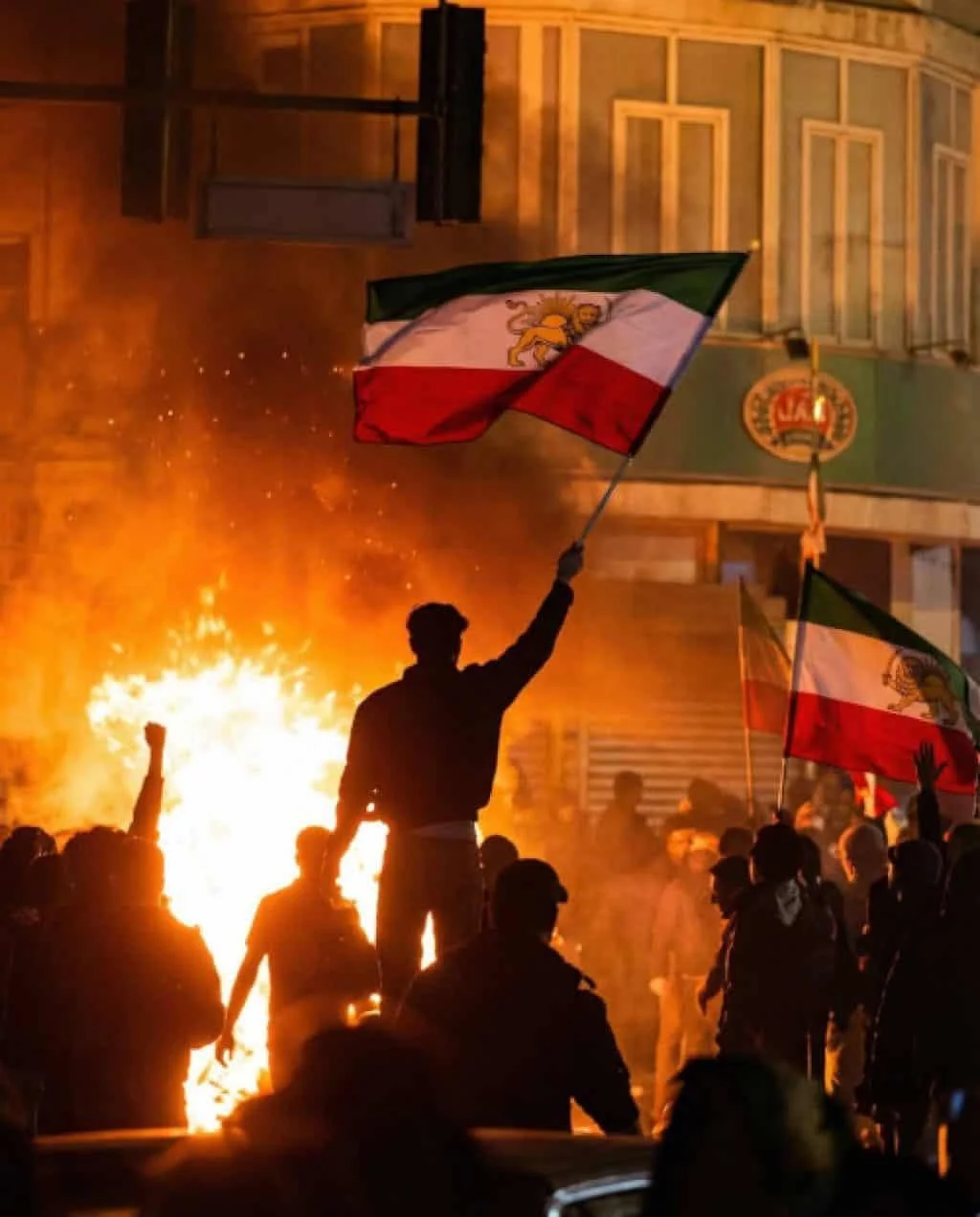
Revolutionaries in Iran flying the Iranian sun and lion flag during the uprising, January 2026.
National Pride
Unlike societies fractured by tribal divisions, Iranians are not slaves to such warfare. Though it's seen internal strife through the centuries, Iran's borders have endured for millennia, and its people have lived side by side longer than most Western countries have existed. Still, the arrogance of some outsiders suggests that a nation of such ancient continuity is somehow incapable of remaining intact.
To be clear, Iran does have other ethnicities and clans within its borders, and potentially, they can be vectors to be exploited by those who would want to destroy the integrity of the country. No action is without risk, but if the risks are known and understood, they can be managed.
The Return of the King
The return of the Shah (HRH Crown Prince Reza Pahlavi, son of the late Shah) to the public eye and his calls to action have brought millions of people to Iran's streets in open revolution. Iranians are rallying to Pahlavi, risking their lives and shedding blood for a shared vision. When he gives a directive, they respond in overwhelming numbers. This fact alone is a resounding referendum on their goal. They chant his name by the thousands and write it on walls, sometimes in their own blood. Their deafening message is imbued with centuries of monarchical tradition - unmistakable unless deliberately ignored.
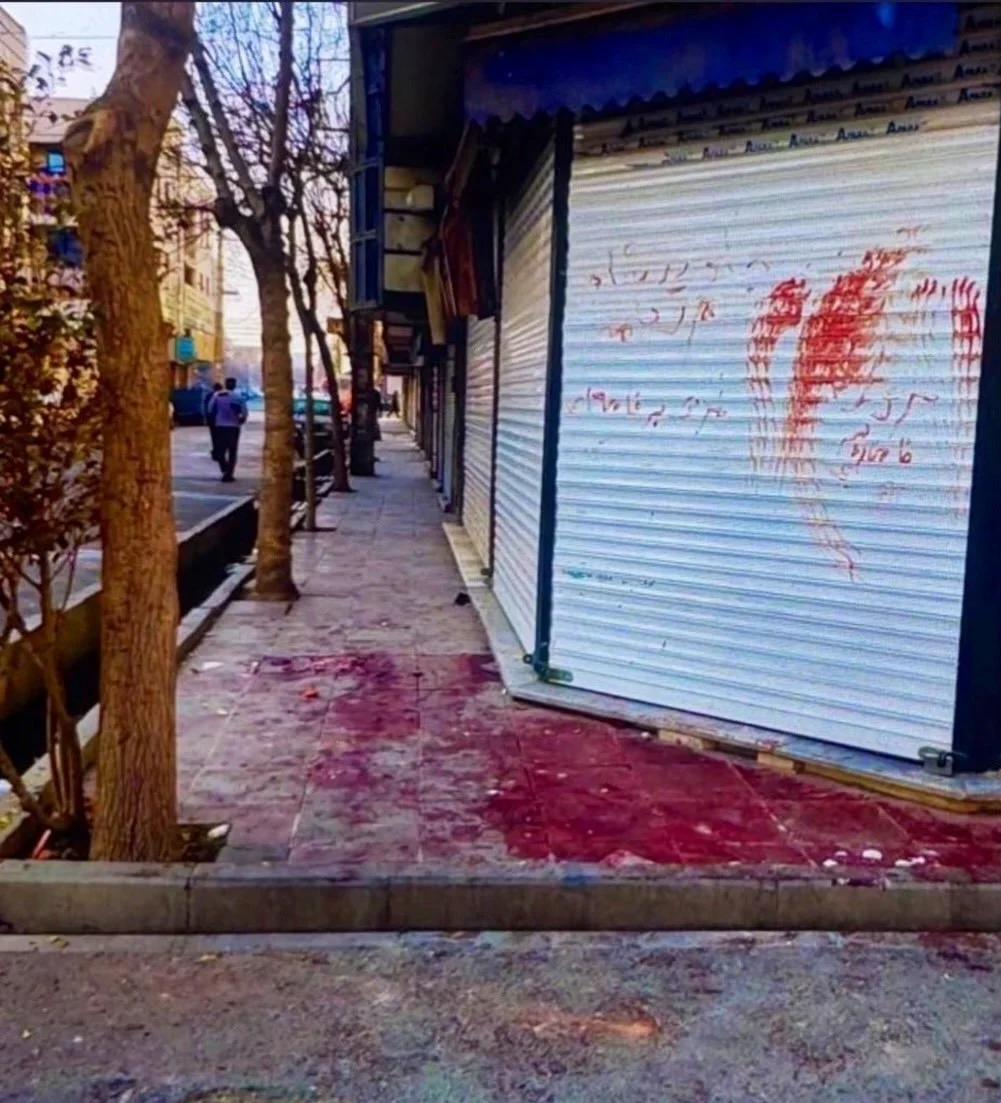
A photo of an outside wall in Tehran, with "Long Live the King" and "Death to Khamenei" written in Farsi in blood, January 2026.
A Plan of Action
More than just a symbol, Reza Pahlavi has emerged as a leader and presented a plan covering restoration of basic functions, establishment of diplomatic ties, rejoining the League of Nations, and so forth, including a national vote on the system of government and representation. This is not aimless chaos; there's a defined structure and methodology allowing Iran to move quickly and decisively post-Islamic Republic, complete with networks on the ground prepared to act.
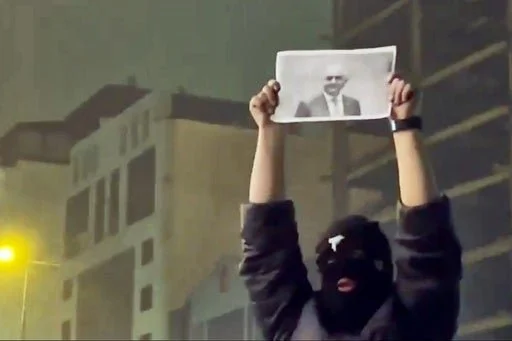
An Iranian protestor holding up a photo of Reza Pahlavi, January 2026.
The case for regime change is undeniable, and the myth of an immutable curse of regime change is based on false parallels to entirely different cultures. Allowing historical illiteracy to condemn 90 million people to suffer under violent oppression would be a travesty.
Which brings us to the case for American intervention.
America Lending a Hand Is Not America Invading
The idea of isolationism is, at its core, profoundly shortsighted. In an interconnected global economy and geopolitical landscape, it is neither practical nor sustainable. This is not an endorsement of unchecked globalism, but a simple acknowledgment of reality: manufacturing requires raw materials often sourced beyond one's borders, and profitability demands access to both domestic and international markets.
Securing favorable terms in trade, resources, and alliances requires the ability to project influence effectively. One cannot achieve this by retreating inward and remaining passive.
With that in mind, how would America stand to benefit from supporting the Iranian people's will: toppling the current regime and backing Crown Prince Reza Pahlavi as a transitional leader toward a free, secular Iran?
Strategic Mastery: A Free Iran Tilts the Balance Against China and Russia
A free Iran represents a massive victory in the balance of power against China and Russia. In the logic of great-power competition (major powers contesting influence, resources, and strategic access short of direct war), energy and infrastructure are leverage, not side issues. (U.S. Department of War) For years, Beijing has treated sanctioned producers as pressure valves: it has taken large volumes of Iranian crude oil at meaningful discounts, and it has relied on oil-backed lending arrangements elsewhere that convert barrels into geopolitical staying power. (Reuters) The strategic point is simple: if these discounted energy flows are disrupted, and if the associated commercial footholds (ports, logistics corridors, and resource concessions) become less secure, it raises the cost of power projection and weakens the supposed durability of China’s external network. When authoritarian client states face regime stress or financial rupture, and their patrons cannot, or choose not to, absorb the cost, it sends a signal to other would-be proxies that external protection has limits, reshaping alignments in ways that compound over time. (Reuters)
Immediate Relief for Consumers and Markets
If energy from a free Iran can re-enter global markets openly and at scale, without sanctions frictions that complicate buying, insuring, shipping, and financing, markets would likely price that in quickly. Oil is globally priced, so incremental supply and better certainty around Iran can lower the geopolitical “risk premium” that often inflates benchmarks like Brent, which then flows into diesel, jet fuel, and gasoline over the following weeks.
The key nuance is what “immediate” means: prices can react fast, but physical relief depends on how many additional barrels actually arrive and whether other producers (notably OPEC+) offset the increase by cutting elsewhere. Venezuela's recent dip is a reminder of the fluctuations that can occur after regime change.
A Near East Security Alliance That Reduces U.S. Troop Burden
US alliances with Iran, Israel, the UAE, and India would reduce US military engagement in the Middle East, while increasing revenue generated through military equipment and platform contracts with a near-east, NATO-like alignment. This is safer for US troops, less expensive for taxpayers, and boosts the economy through a new revenue stream.
Cutting Off the Head of the Snake
Perhaps the most consequential outcome of ending the Islamic Republic would be evaporating the regime’s ability to sponsor violence beyond its borders. For decades, Tehran has used state resources, front organizations, and proxy networks (Hamas in Gaza, Hezbollah in Lebanon, the list goes on) to finance, train, and coordinate extremist activity - targeting dissidents, destabilizing neighboring countries, and openly threatening Western interests.
Eliminating the Islamic Republic, the state sponsor and operational hub of much of the world’s terrorism, would in turn eliminate a large majority of the terror threat almost overnight. As their financial pipelines and logistical channels are dismantled, the capacity for organized attacks and intimidation campaigns falls dramatically, saving lives and reducing the long-term security burden for countries forced to defend against them.
Helping Iranians Win Their Future
A free Iran is not a theory; it’s the stated will of millions of Iranians who have risked everything to reclaim their country. The mistake many analysts make is assuming Iran must replay the same post-regime chaos seen elsewhere, despite Iran’s distinct national identity, social cohesion, and the presence of a credible unifying counter-figure with an articulated transition plan.
For the United States, supporting this outcome is not charity and it is not conquest. It is a strategic decision with clear upside: weakening adversarial blocs, reducing the need for sustained U.S. military posture in the region, expanding opportunities for security cooperation, stabilizing energy markets, and degrading the regime’s long-running proxy infrastructure.
The choice, then, is not between “doing nothing” and “invading.” It is between passively absorbing the costs of the current regime, or actively helping the Iranian people close this chapter on their own terms. If America wants fewer crises, fewer deployments, and a more stable Middle East, it should treat a free, secular Iran as a core national interest - and act accordingly.
==========
Moshe ben Yehudah (pen name) is a geopolitical and military analyst, focusing on the Near East, North Africa, as well as Central and South America. He is a veteran of the IDF, including combat service in urban, modern warfare.
Iran Update - 01/19/26
There don't seem to be many changes in the situation in Iran. Currently, the protests may have quieted down a bit inside the country, probably due to exhaustion. I truly hope it's not people giving up since help hasn't arrived…
There don't seem to be many changes in the situation in Iran. Currently, the protests may have quieted down a bit inside the country, probably due to exhaustion. I truly hope it's not people giving up since help hasn't arrived.
Information is still very difficult to come by, given the blackout of all communication over the past several days, and the smallest easing up now.
Reports still seem to indicate the US is sending military support to the region, restocking armaments, etc.
On the positive side, yesterday, around the world, there were many rallies in support of Reza Pahlavi and the protestors demanding an end to the Islamic regime. Toronto, it seems, had over 100,000 people gather.
As well, there was concern that the Islamic Republic's Foreign Minister, Abbas Araghchi, should absolutely not be attending the World Economic Forum given the horrific violence the regime is inflicting on its own people.
Indeed, the WEF has disinvited him. In and of itself, this seems very minor and unimportant, but it is a sign of the world slowly coming together in support of freedom in Iran.
We wait and hope and pray.
Iran Update - 01/15/26
It seems that the airstrikes against the regime we were expecting were called off at the last minute. A few ways to interpret this:
It seems that the airstrikes against the regime we were expecting were called off at the last minute. A few ways to interpret this:
***
1. Pres. Trump wants to find a diplomatic solution.
> Any realist will know this is just kicking the can down the road, and keeping the status quo is just not acceptable at this point. Any assurances from the Islamic Regime that executions and killings have been halted are simply lies.
***
2. The optimists are saying that it was a strategic plan to reveal the Islamic Republic's war response, and thus, its weaknesses, as more US military assets are still en route.
> I hope this is true, but I am dubious. There are reports of resistance to America's plans from countries like Turkey, Qatar and Saudi Arabia, going so far as to say they won't let US forces operate out of those respective countries' bases. Not sure how believable or accurate these are, but it's possible.
***
3. The detractors are using this halting of the attack to mock America as a paper tiger, etc., and are doing everything they can to lie about the situation in Iran.
> This is expected from those who reside in the muck. Many of them are likely being paid by the mollahs and their allies. One thing many of us know is that stalling tactics are one of the mollahs' favorite tools. They do this every single time in every single situation.
***
4. Although Reza Pahlavi is the clear frontrunner and most popular leader we have to take over Iran from the mollahs, there are people in the US government who want someone else.
> This, sadly, is what I fear most. The MEK bizarrely has a lot of influence, with people like Rudy Giuliani and Mike Pompeo and several other Republicans on their payroll. The MEK is largely hated by Iranians everywhere, and as a Marxist / Islamic cult, they'd just be Khomeini 2.0. Some reports indicated JD Vance was also pushing for them, which I hope is completely false.
***
For Iranians, we've come too far. If President Trump and America back off, it will mean death for thousands of Iranians, and frankly, it will be seen as a betrayal.
We're in it now. I can only hope and wish that wiser heads will prevail.
Long live a free Iran!