Owning the Revolution
Cave-aged cheese, the 1967 Citroën DS-21 (convertible, of course), and the American Revolution all show that on rare occasions, however much it might pain us to admit, there is value in looking to the French for guidance. While I’d prefer to talk about the great fromagers or hydropneumatic suspension, the French role in our own American Revolution screams out to be learned from, as Iranians continue to bravely fight for their freedom.
The average American has no idea that in the years immediately following the Declaration of Independence, the French provided military advisors, most of the gunpowder, tens of thousands of arms, and hundreds of pieces of artillery to the Colonists’ cause. Most serious military historians admit that Yorktown, where the British met their defeat, would have been impossible without Admiral de Grasse and the French fleet.

Louis Charles-Auguste Couder, “Siege of Yorktown” (1781)
Can America do for Iranians what France did for Americans? An honest answer to that question requires a brief detour to address the strategic wreckage of our past record.
In Afghanistan, where I served, we lightly dislodged al-Qaeda and the Taliban and set up a feckless puppet regime in Kabul. This unleashed the Haqqani shadow state, a mafia-jihadist network arguably worse than what had come before.
In Iraq, there was no obvious replacement for Saddam Hussein. Even worse, we disbanded and destroyed the state’s infrastructure and enforcement mechanisms, sending thousands of humiliated, trained military to nurse grievances with idle hands. That power vacuum handed influence to instructors of terrorism like AQI, ISIS, the Badr Organization, Kata’ib Hezbollah, and others.
In Libya, high on the Arab Spring, we ignored that the rebels were worse than the dictator. The state failed to such an extent that instead of a proliferation of liberty, we got open-air slave markets.
We must learn from our mistakes—but we mustn’t overlearn from them. Iraq, Afghanistan, and Libya should serve as deadly lessons, not paralytics to positive action.
The recent actions in Venezuela suggest at least some lessons from our failed interventions have been absorbed:
1. Quick, decisive action.
The longer you intervene, the more things can go sideways.
2. Enable; don’t invade and occupy.
It sends the message that America owns the revolution.
3. Prevent a vacuum.
While it may feel more satisfying to root out every last bad actor, the state must function and incentives must point toward stability.
Not only must we learn from the failures of previous interventions, we must also learn from success.
The French deserve more credit for their pivotal role in America’s revolution. But the lack of recognition is a feature, not a bug. A people must own their revolution. George Washington is our founding father, not King Louis or the Marquis de Lafayette.
Iran is unique in that Reza Pahlavi, the Crown Prince in Exile, enjoys unusually broad-based support among the people inside Iran and across the diaspora. He has also laid out realistic plans on transitioning from revolution to a reformed government.
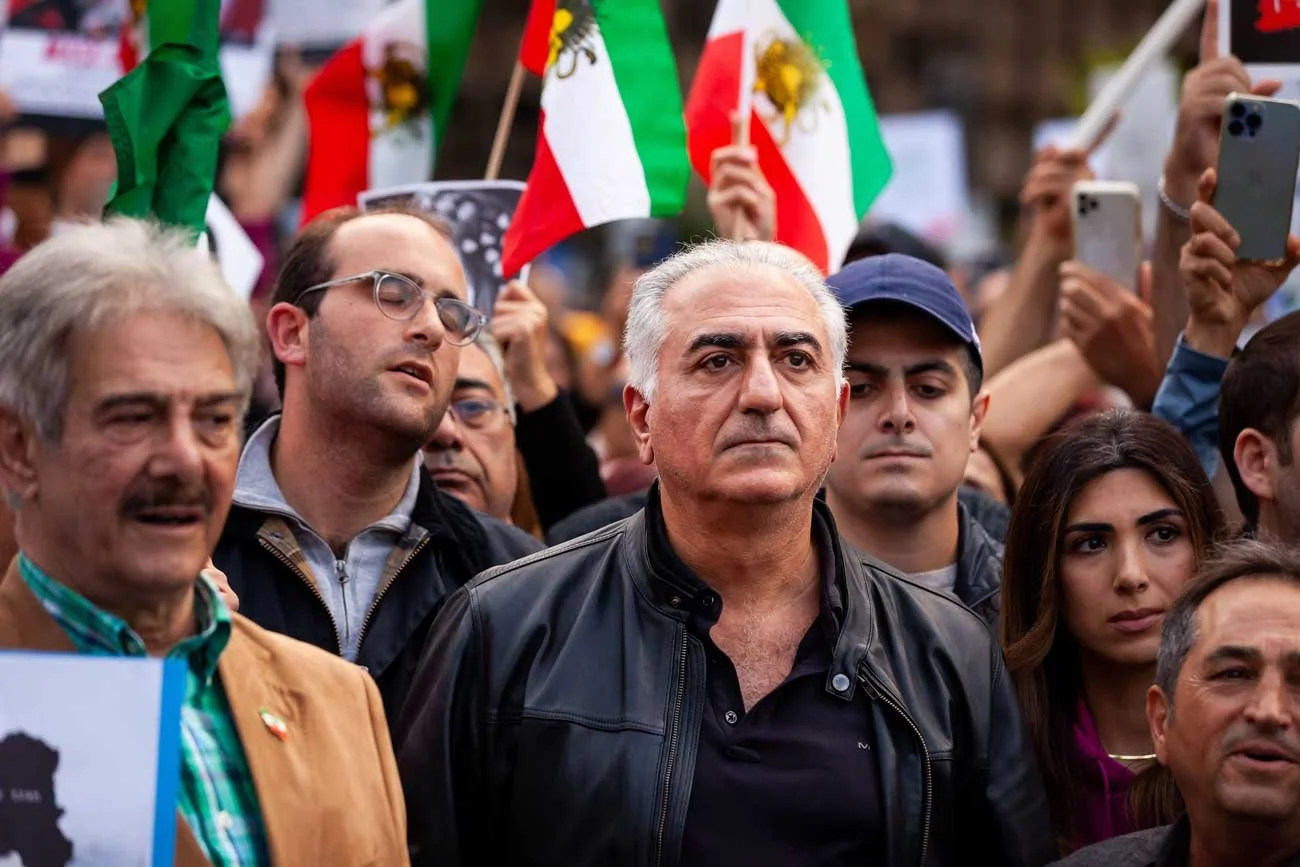
Crown Prince Reza Pahlavi in the September 2022 protests in Washington DC against the killing of Mahsa Amini.
Photo : Allison Bailey
As Edmund Burke observed, the American Revolution worked because it was conservative in nature, not transformative. It was about maintaining bottom-up culture, institutions, and rights, not tearing society down.
Iran is not Afghanistan, nor Iraq, nor Libya. It is a country with a pluralist culture developed over centuries, a pro-Western orientation, and institutional knowledge — all within living memory. A global network of Iranian expats with education, money, and a strong desire for a conservative revolution are waiting in the wings.
Unlike many countries in the region, Iran isn’t defined by a strongman holding down an anti-Western, religiously fanatical population. In Iran, in fact, it is the opposite.
Could intervention go poorly? Of course. Some risks are known. Operations can go sideways. No plan survives first contact with the enemy.
But most bad outcomes here are no worse than the status quo: A millenarian regime of Twelver Shias seeking a nuclear bomb while funding, arming, training, and providing intelligence for insurgent terrorist groups in Iraq, Syria, Lebanon, Yemen, and Gaza (to name a few).
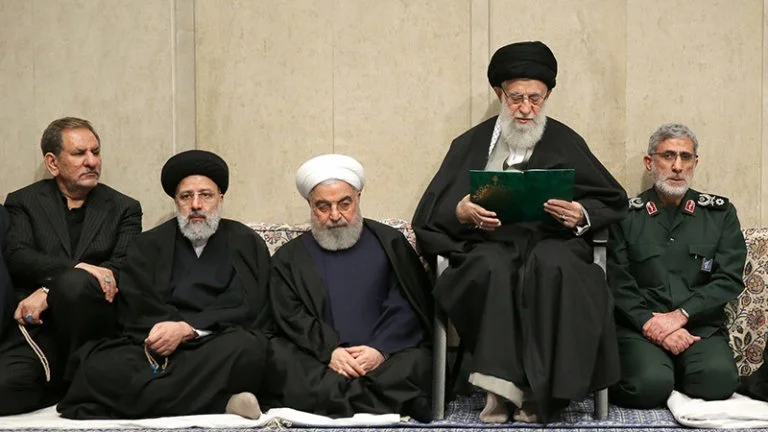
“Supreme Leader” Khamenei, seated in chair, at the wake of Ghasem Soleimani.
The potential upsides? To name a few:
Freeing an educated population of 90 million to become productive members of a global economy;
Ending the threat of a nuclear Iran;
Cutting off discounted dark-fleet oil to China (hampering its ability to project power abroad and compete in the AI race);
Providing LNG to Europe and undermining Russia’s revenue stream that funds their war in Ukraine;
Increasing the chance of peace in Gaza, stability in Lebanon, and maybe even an end to the civil war in Yemen;
Decreasing the power of Iraqi militias;
Allowing the United States to complete its pivot back to the Western Hemisphere.
You may come away from this unconvinced how, or even if, we should help Iran.
But one thing should be clear: knee-jerk denials of help aren’t a sign of learning from Iraq and Afghanistan. Wisdom in complex and grave foreign policy decisions must weigh the lessons of failures and successes. It must take into account the risk of action, but also the risk of inaction and a closing window of opportunity.
It must, of course, be sober about what could be lost—but it must also account for what can reasonably be gained.
==========
Robert Haglund is a talk radio producer, former Arabic cryptologic linguist for Air Force Intelligence, and a veteran of the War in Afghanistan. He is also the co-author of “Rescuing the American Project: How Nationalism and Immigration Will Revive the Republic.”