Iran 2026: A Military & Strategic Assessment
Decades of Intelligence Prep Meet Escalating Readiness
Since at least 1979, the Islamic Regime occupying Iran has been a consequential ground source for Western intelligence, with America's CIA, Britain's MI6, France's DGES, Germany's BND, Australia's ASIS, and others supplying strategists and analysts with a full spectrum of operational blueprints, from targeted engagements to total overthrow. Out of them all, the Israeli Mossad has quite definitively led the field in penetration and results.
These intelligence products have been meticulously archived: filed away for the proverbial rainy day, ready for the moment when leaders must “break glass in case of emergency.” Preparation for an operation did not begin a few weeks ago when Iranians poured into the streets once again, demanding an end to the 47-year occupation and the return of the Shah. This has been in the planning stages for decades.
So what factors would strategists be calibrating today when deciding which scenario to retrieve from the vault, assess probabilities of success, and allocate strategic assets?
IRGC adaptation post-conflict: What lessons has the Islamic Revolutionary Guard Corps drawn from the 12-Day War, and how have they revised their defensive doctrines and force posture in response?
Foreign asset transfers: Have new Russian or Chinese systems (missiles, drones, electronic warfare capabilities, or other platforms) recently reached IRGC hands, and how do they alter the threat picture?
Point of no return on the ground: Are there visible indicators (mass defections, collapse of internal security, widespread refusal of orders) signaling that the regime has crossed an irreversible threshold, beyond what airpower alone can resolve?
Post-regime transition design: What does a viable transition look like? How can external actors shape conditions to produce an acceptable outcome rather than a new power vacuum or competing factions?
Kinetic realities in collapse: In the event of sudden regime disintegration, what are the on-the-ground dynamics (fragmentation of command, looting of arsenals, rogue units, refugee flows, or opportunistic militia action) that would demand immediate response?
These are just a handful of the evolving variables under constant review at the highest levels of strategic planning. As assessments shift, so do the corresponding requirements for strike packages, defensive postures, and supporting assets.
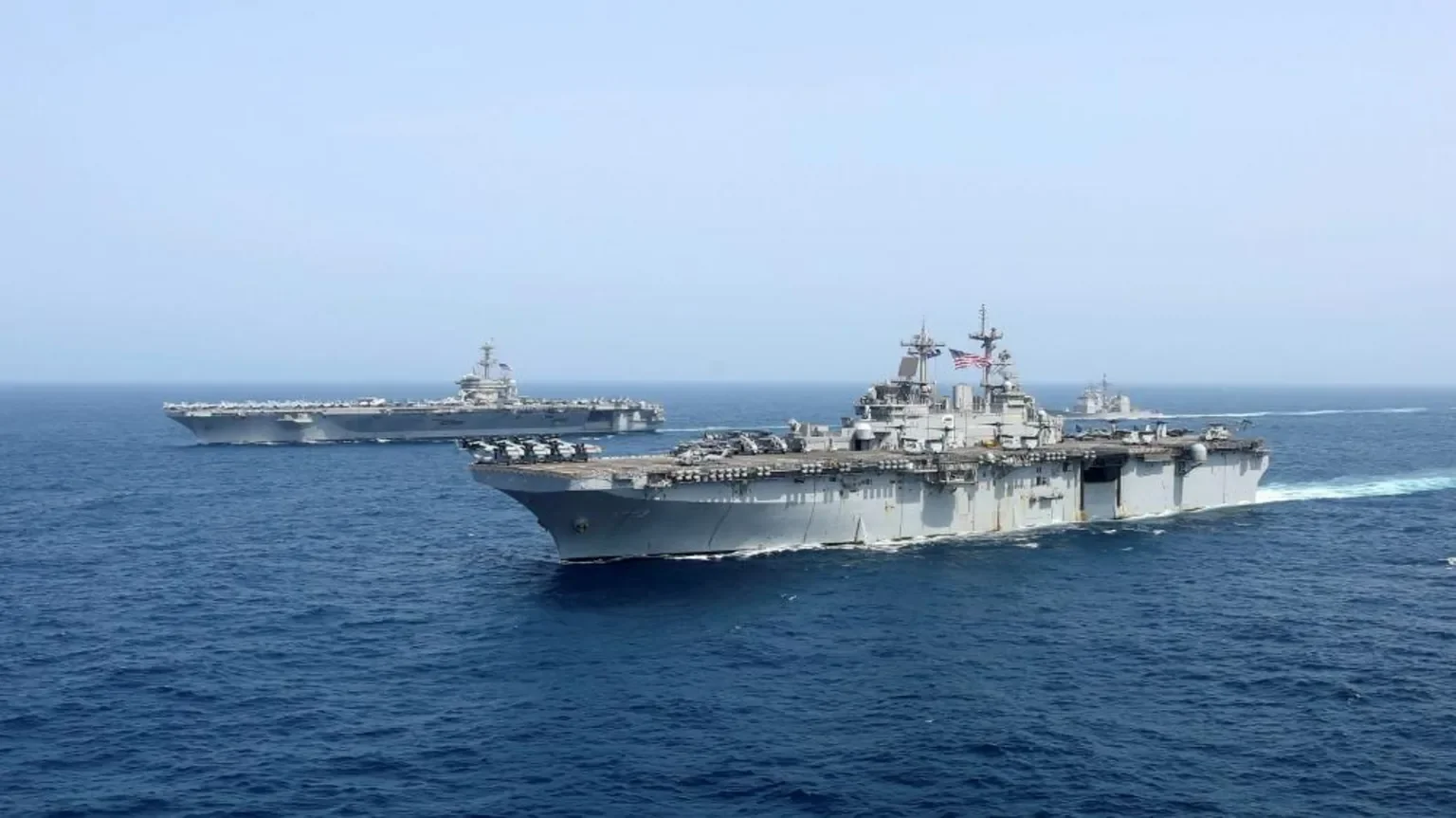
When we see the US and its NATO allies positioning an abundance of multilayered missile and drone defenses, it suggests the expectation of a massive counteroffensive to any Western strike. There’s also a lead time to be expected as air defenses are brought online and oriented, as well as defense coordination drills between multinational coalition forces to maximize efficiency while preparing to avoid friendly fire.
That is how you end up with days turning into weeks.
As the objectives become more robust, more assets get deployed and prepped. Varying scenarios are trained intensively. Professional militaries do not act recklessly; they operate on the premise of overwhelming force projection, utilized with top tier proficiency.
The Target Hierarchy: From Low-Priority Militias to Core Regime Assets
What does the potential target bank of Islamic Republic assets include?
Air defenses including, but not limited to, MIGs, radar, air defense batteries
The lowest-priority targets are foreign militias. (These are the Iraqi, Pakistani, Palestinian militias you see in pick up trucks shooting at unarmed civilians.)
The next level would be Basiji and local police. These target areas have nodes in their operational bases
Communication nodes
IRGC provincial bases, barracks, weapons depots
Provincial government facilities
IRGC military installations for national command and control
Regime targets including individual people and government offices
Ballistic missile and drone facilities including manufacturing and stockpiles, as well as launcher infrastructure
Nuclear program and stockpiles of material
Each target presents its own logistical considerations, platform requirements and layered strategy for where it lies in the targeting progression. The order listed is not an implication of processes, but a preliminary look into upscaling from the lower levels to upper echelons.
To ensure all necessary capabilities are in the theater and ready to achieve their objectives, we have observed A10s, F15s, F18s, EA18Gs, F16s, F22s, MC-130J, the Rivet joint platform, E11A, WC-135R Constant Phoenix platforms, and various other assets.
The operational collective abilities include air defense suppression, ground troop neutralization, surface-level target elimination, "bunker busters," intelligence gathering and communication disruption, aerial communication coordination, uranium detection and a host of other capabilities.
This does not account for the carriers, destroyers and submarines armed with tomahawk missiles or the B2 and B52 platforms that don’t need to be stationed in CENTCOM to have range for operational usage.
What About American Ground Troops?
As many, including The Free Iran Project, have argued, Iran is neither Iraq nor Afghanistan, and its current situation is not the same as those countries before the respective wars that ensued within their borders.
The discussion of ground troops (“boots on the ground”) requires an important distinction when considering viability. When people speak of boots on the ground, they’re referring to infantry, mechanized divisions, and the like. This option is very unlikely to manifest in Iran - chances are likely just above zero. Iran represents both an extremely difficult topography and an immense land mass. Adding another complication, the regime has complex tunnel networks and bases hidden in mosques and hospitals, which would present negative optics for the military in western media. Words like “quagmire” spring to mind, and the problem is one Trump will probably wisely avoid.
Conversely, an infiltration by special forces to achieve high-value objectives, followed by a clean exfiltration, is a viable strategic consideration. Small teams with clear, narrowly-scoped missions can leverage the chaos and degraded situational awareness from airstrikes to move in and out effectively.
Beyond Deterrence: The Signal of Imminent Kinetic Action
This level of military buildup and readiness goes beyond routine deterrence; it signals serious intent. Paired with coordinated diplomatic pressure and escalating economic measures against the regime, the conclusion is quite clear: kinetic options are on the table. Ground developments have made a robust, adaptive target-acquisition network essential throughout CENTCOM's area of responsibility.
Preparations have advanced to mature stages, coinciding with a hardening global stance - the regime is illegitimate, and that illegitimacy provides the legal basis for decisive action. Time is running short, though, and this period of tense anticipation will not persist indefinitely.
==========
Moshe ben Yehudah (pen name) is a geopolitical and military analyst, focusing on the Near East, North Africa, as well as Central and South America. He is a veteran of the IDF, including combat service in urban, modern warfare.